Which Ejection Method Is Better for Injection Molding?
Choosing the Right Ejection Solution for Injection Mold Design
In injection molding, part ejection is not only about removing the molded part from the cavity. The right ejection method directly affects:
- Part surface quality
- Mold reliability
- Production efficiency
- Tool maintenance cost
For standard plastic parts, traditional ejector components such as ejector pins, ejector sleeves, and lifters are usually sufficient.
However, when molding thin-wall containers, deep-drawn parts, transparent components, or products with large contact areas, mechanical ejection may create problems such as vacuum sticking, deformation, and visible ejector marks.
In these situations, an air poppet valve can provide additional vacuum-breaking assistance.
This article compares air poppet valves and traditional ejector components to help mold designers select the most suitable ejection solution.
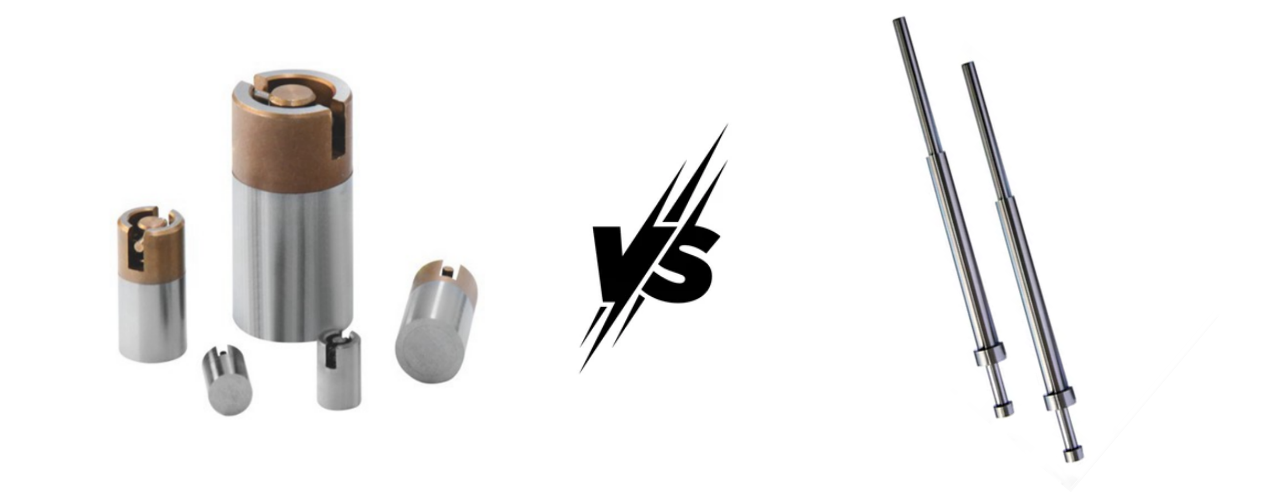
Air Poppet Valve vs Traditional Ejectors
| Item | Air Poppet Valve | Traditional Ejector Components |
|---|---|---|
| Main purpose | Break vacuum between part and mold core | Push the molded part away mechanically |
| Working method | Compressed air release | Ejector plate movement |
| Best for | Thin-wall, deep-drawn, cosmetic parts | General injection molded parts |
| Surface quality | Minimal visible marks | Possible ejector marks |
| Ejection force | Vacuum release assistance | High mechanical pushing force |
| Installation | Requires air channel and control system | Standard mold ejector structure |
| Cost | Higher system complexity | More economical |
| Typical use | Packaging, containers, appearance parts | Automotive, industrial, structural parts |
What Is an Air Poppet Valve?
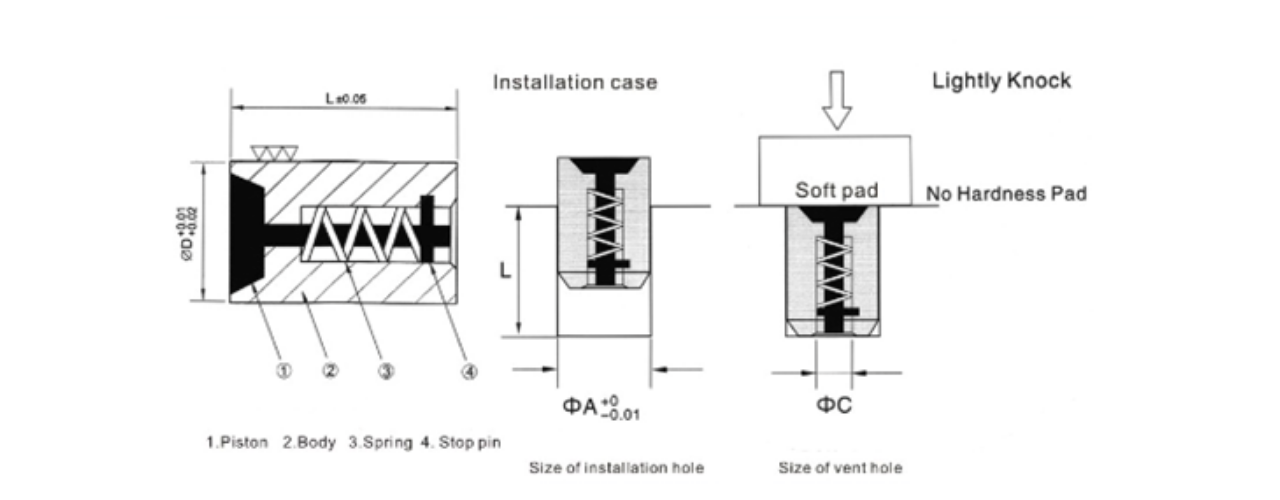
An air poppet valve is a precision injection mold component designed to release molded parts by introducing compressed air between the plastic part and the mold core.
During injection molding, some parts create a strong vacuum effect after cooling because of:
- Large surface contact area
- Deep cavity structure
- Thin wall thickness
- Material shrinkage
The air poppet valve reduces this vacuum force, allowing the part to separate more easily from the core.
Unlike traditional ejector pins, its main function is not to push the part out directly, but to improve release conditions before final ejection.
How Traditional Ejector Components Work
Traditional ejector systems remove molded parts through mechanical movement from the ejector plate.
Common components include:
Ejector Pins
Ejector pins are the most widely used solution for standard injection molding applications.
They provide direct pushing force and are suitable for:
- General plastic parts
- Industrial components
- Mold structures with sufficient ejection area
Ejector Sleeves
Ejector sleeves provide a larger contact area than pins.
They are commonly used for:
- Cylindrical parts
- Boss structures
- Components requiring balanced ejection force
Lifters
Lifters combine vertical ejection with angled movement.
They are mainly used for:
- Undercut structures
- Complex part geometries
Key Difference: Vacuum Release vs Mechanical Force
| Feature | Air Poppet Valve | Ejector Pin |
|---|---|---|
| Force source | Pneumatic pressure | Mechanical movement |
| Main function | Vacuum breaking | Part pushing |
| Best application | Thin-wall parts | General parts |
| Surface marks | Minimal | Possible marks |
The fundamental difference between these two solutions is the way they solve ejection problems.
Air Poppet Valve
The air poppet valve solves the problem before ejection by reducing vacuum adhesion.
It is especially effective when the main challenge is:
- Part sticking to the core
- Large contact surface
- Cosmetic surface protection
Traditional Ejector Components
Traditional ejectors solve the problem by applying physical force.
They are better when the main challenge is:
- Heavy part weight
- Strong shrinkage force
- Mechanical retention
- Complex structures requiring direct pushing
Advantages of Air Poppet Valves
1. Reduce Vacuum Sticking Problems
Deep-drawn and thin-wall parts often create a vacuum effect during mold opening.
Air poppet valves help release this trapped vacuum, improving ejection stability.
Typical applications include:
- Food containers
- Plastic trays
- Flower pots
- Thin-wall packaging
2. Improve Cosmetic Surface Quality
For transparent or appearance-critical products, ejector marks can become unacceptable.
Air-assisted release reduces dependence on concentrated mechanical pushing points.
Benefits include:
- Fewer visible marks
- Reduced stress whitening
- Better appearance quality
3. Reduce Stress on Mold Components
When excessive ejector force is required, problems may occur:
- Bent ejector pins
- Damaged molded parts
- Increased mold wear
Vacuum breaking reduces the load on the mechanical ejection system.
Limitations of Air Poppet Valves
Air poppet valves are not designed to replace all ejector components.
They Cannot Provide High Mechanical Ejection Force
For heavy or highly retained parts, mechanical ejectors are still necessary.
Examples:
- Thick-wall industrial parts
- Parts with deep ribs
- Strong shrink-fit applications
They Require Additional Mold Design
Compared with standard ejector pins, air poppet valves require:
- Proper air channel design
- Suitable installation position
- Pneumatic timing control
Incorrect design may reduce performance.
Advantages of Traditional Ejector Components
1. Strong and Reliable Ejection Force
Traditional ejectors remain the preferred choice for most injection molds because they provide direct mechanical force.
2. Simple Mold Structure
Compared with pneumatic systems, ejector pins and sleeves offer:
- Easy installation
- Simple maintenance
- Lower cost
3. Wide Application Range
They can be adapted to many mold designs through different structures and sizes.
When Should You Choose an Air Poppet Valve?
Choose an air poppet valve when:
✓ The molded part has thin walls
✓ Vacuum sticking occurs frequently
✓ The surface is visible or cosmetic
✓ Ejector marks are unacceptable
✓ The part has a large contact area with the core
When Should You Choose Traditional Ejector Components?
Choose traditional ejectors when:
✓ High pushing force is required
✓ The part structure is strong
✓ Surface marks are acceptable
✓ Cost efficiency is a priority
Can Air Poppet Valves Work Together With Ejector Pins?
Yes.
In many advanced injection molds, the best solution is a combination of both systems.
The typical process is:
- Air poppet valve breaks the vacuum force.
- Ejector pins or sleeves provide final pushing force.
- The part releases with lower stress and improved stability.
This combined approach is especially useful for high-volume production where both reliability and appearance quality are important.
Engineering Factors Before Selecting an Ejection Method
Before choosing between an air poppet valve and traditional ejectors, mold engineers should evaluate:
Part Design
Consider:
- Depth
- Draft angle
- Wall thickness
- Contact area with the core
Plastic Material
Different materials have different shrinkage behavior.
Higher shrinkage materials may require stronger ejection assistance.
Surface Requirements
For cosmetic parts, minimizing ejector marks may be more important than maximum mechanical force.
Production Volume
For high-volume production, stable ejection performance is critical to reducing downtime.
FAQ:
Can an air poppet valve replace ejector pins?
Usually no. Air poppet valves mainly reduce vacuum adhesion, while ejector pins provide the mechanical force needed for final part removal. Many molds use both systems together.
What injection molding parts need air poppet valves?
Air poppet valves are commonly used for thin-wall, deep-drawn, and appearance-sensitive parts where vacuum sticking or ejector marks are production concerns.
Do air poppet valves prevent ejector marks?
They can reduce the need for strong mechanical pushing, which helps minimize ejector marks, but they do not eliminate all ejection marks in every mold design.
What should be considered when installing an air poppet valve?
Important factors include valve position, air supply design, sealing performance, mold structure, and synchronization with the ejection cycle.
Conclusion
Air poppet valves and traditional ejector components solve different injection molding challenges.
Traditional ejectors provide reliable mechanical force and remain the standard solution for most applications.
Air poppet valves are more suitable when vacuum sticking, thin-wall deformation, or cosmetic surface requirements become critical.
For many high-performance injection molds, the most reliable solution is not choosing one system over another, but combining air-assisted vacuum breaking with mechanical ejection.
HTX Precision provides customized injection mold components including air poppet valves, ejector pins, ejector sleeves, and other precision mold parts for global mold manufacturers.
Send your mold drawing or application requirements, and our engineers can recommend a suitable ejection solution for your project.