
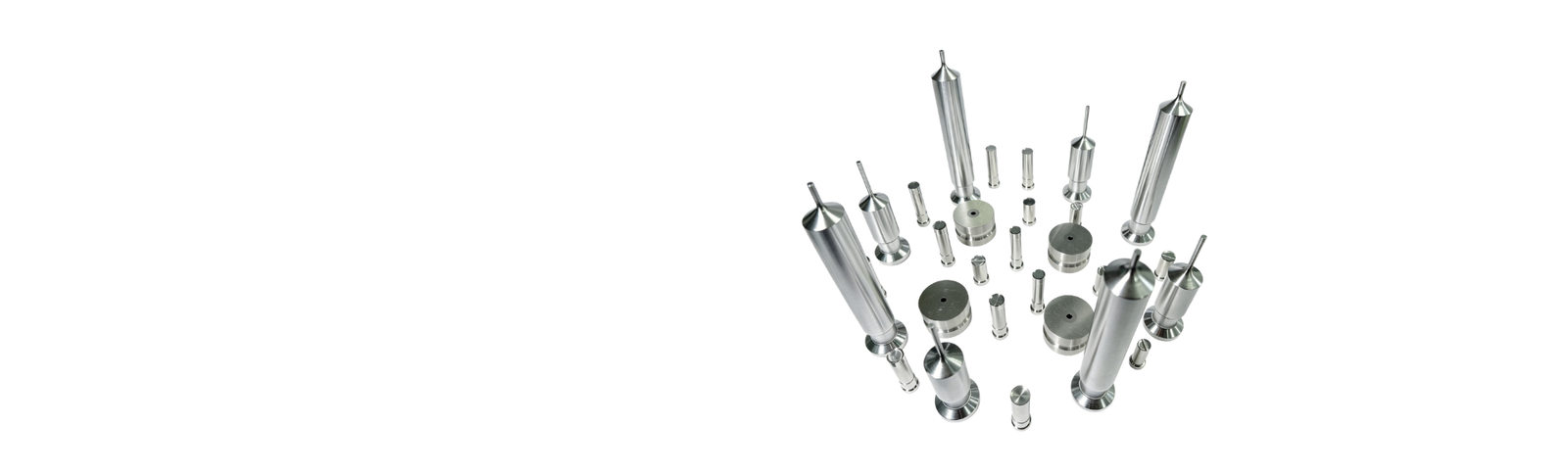
What Are Dies and Punches for Tableting?
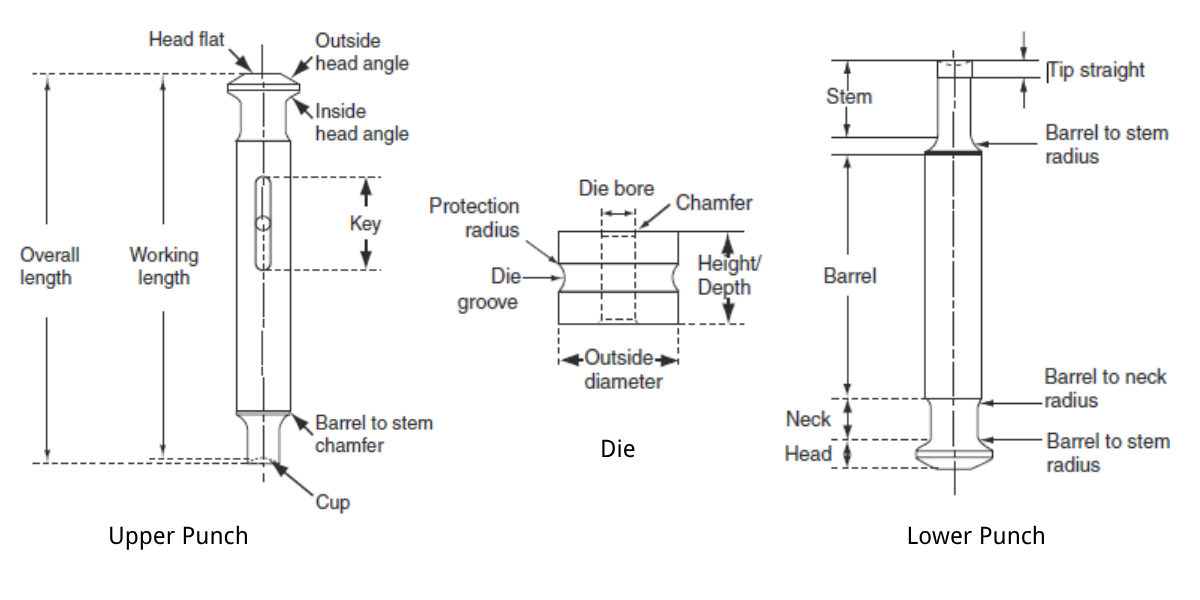
The punches & dies are the core components of your tablet presses; they include the upper punch, the lower punch, and the die. The upper punch enters the die from the top, the lower punch from the bottom, and the die contains the powdered material.
Upper Punch: Enters the die cavity from the top and applies compression force to the powder.
Lower Punch: Controls the powder fill depth during compression and ejects the finished tablet from the die.
Die: Forms the tablet’s outer boundary and, together with the upper and lower punches, defines the final tablet dimensions.
This tooling system is customized to match your tablet press model, powder characteristics, and tablet design requirements. Click Read More to see the sketch.
Custom Tablet Tooling Configurations
HTX manufactures tablet tooling in a range of configurations to match your specific demand. All tooling is custom-engineered—not off-the-shelf standard products.
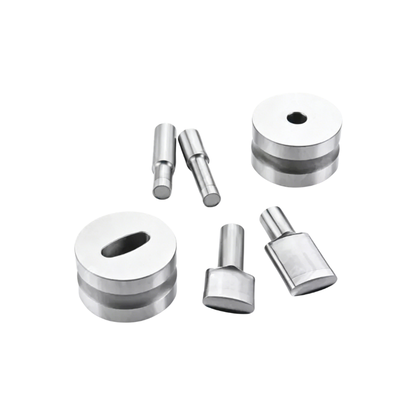
Round, oval, capsule, triangular, heart-shaped, animal-shaped, or fully bespoke geometries. Unique punch profiles improve tablet appearance and brand differentiation.
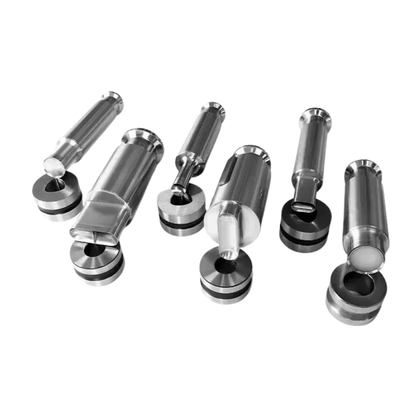
Precision engraving for logos, symbols, lettering, or score lines. High-precision surface finishing ensures clear, consistent markings even in high-volume production.
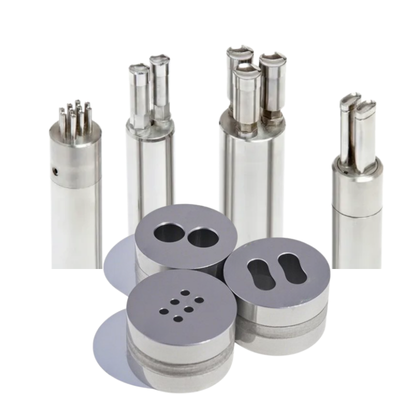
The Multi-tip punches & dies mean one punch with multiple tips, which can produce multiple micro-tablets in a single press. Single punch with multiple tips for producing multiple micro-tablets per stroke. Increases output by up to 300% for small tablet production.
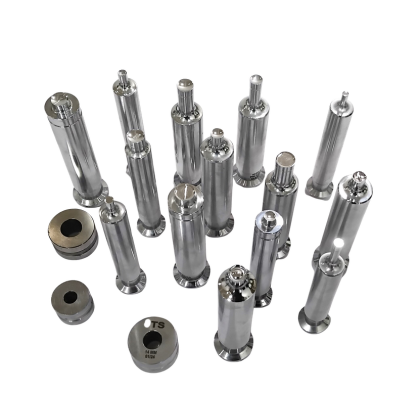
Tooling manufactured to match your specific press model and configuration. We work from your press specifications, existing tooling drawings, or sample tooling.
Why Choosing the Right Tablet Punches & Die Is Critical?

Strict tolerances ensure smooth tablet insertion and ejection, as well as consistent tablet weight and hardness.

High-quality steel selected specifically for powdered materials extends the service life of the dies.

Round, capsule-shaped, oval, or custom shapes are available to meet your diverse tablet design needs.

Specialized surface treatments for dies used with specific powders prevent powder adhesion and reduce downtime.
Tablet tooling Standards & Compatibility
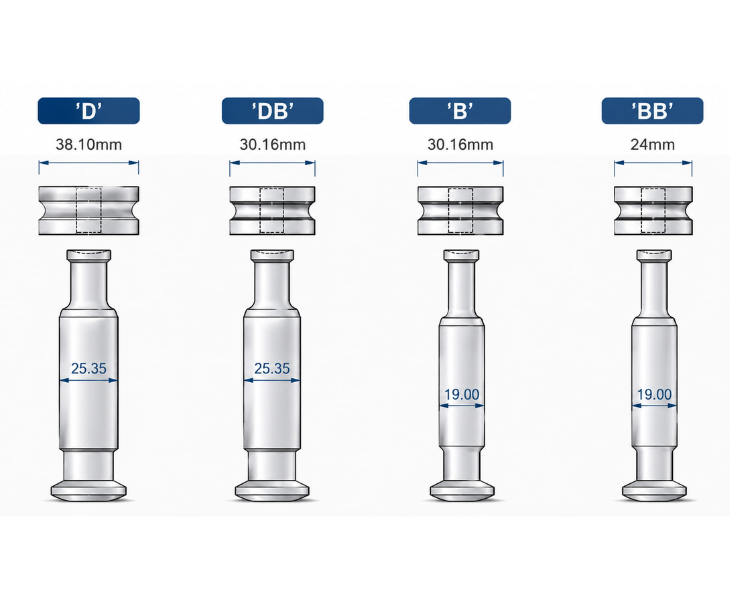
HTX can manufacture the custom tablet tooling to meet the required press configuration and tooling standard, including:
TSM (Tableting Specification Manual)
EU (European standard)
B, D, BB, DB (common tooling classifications)
Press-specific requirements (Korsch, Fette, Manesty, etc., per your documentation)
Before production, please provide your tablet press model, existing tooling dimensions, a tooling drawing, or a sample, whenever available.
Material Solutions for Different Tablet Tooling
The selection of appropriate materials directly affects the service life, performance, and quality of tablet presses. Common materials include:
1. Stainless Steel
It is important to select the appropriate tools. Due to the stainless steel corrosion resistance, strength, and durability, this type of die is suitable for high-volume production, easier to clean, and wear-resistant, making it widely used in the pharmaceutical industry.
2. Carbide Dies and Punches
Carbide is suitable for high-wear applications. This material offers exceptional wear resistance and can withstand the high pressures generated during tablet production. It is ideal for handling abrasive powders and helps extend the service life of the dies.
3. Coated Dies and Punches
Coated dies and punches can extend service life. Typically featuring chrome or titanium coatings, they reduce friction during the manufacturing process and prevent sticking, making them suitable for processing difficult-to-process materials such as high-dose or sticky powders, and the raw material contains active ingredients prone to caking.
You can check the punch for cracks or dents, or reduce the compression force.
If tablets stick together in formulations containing sticky powders, first check for material buildup. You can also use an anti-adhesive agent to ensure the die is fully lubricated.
This is typically caused by misalignment of the punch or uneven filling of the die cavity. You need to check and adjust the alignment between the punch and the die to ensure uniform filling of the die cavity.
At a minimum, please provide the target tablet’s diameter (mm), thickness (mm), or target weight (mg). If there are special logos or shapes, please provide mold drawings or samples to improve matching accuracy.
Yes. Round, capsule-shaped, and oval are standard shapes; for irregular shapes (heart-shaped, triangular, scored tablets, tablets with logos, etc.), please provide 3D drawings or detailed dimensions. We can customize any non-standard or special shapes.
Common materials: S7 (impact-resistant, suitable for most materials), D2 (high wear resistance), 440C stainless steel (corrosion-resistant and anti-adhesive), and cemented carbide (extended service life). Please inform us of your powder’s characteristics (abrasiveness, stickiness, corrosiveness), and our engineering team will recommend the optimal solution.
High-speed production (>50,000 tablets/hour) requires tighter tolerances (≤ ±0.005 mm), higher-hardness steel, and a smoother surface finish. When requesting a quote, please specify your expected tablet press speed (RPM or tablets/hour), and we will provide an enhanced design solution.
Mold lifespan depends on material abrasiveness, pressure, and maintenance. Typical lifespan: S7 punches can produce 5 to 20 million tablets; D2/carbide punches last longer. During operation, if you notice fluctuations in tablet weight, inconsistent hardness, tablet flash, or unusual noises from the tablet press, stop the machine and inspect the molds. Regular maintenance can extend the lifespan by at least 30%.
The Key Factors for Your Dies and Punches for Tableting
For your tablet die and punch projects, whether you are producing simple tablets or complex multilayer tablets, selecting the right tools is critical to meeting your manufacturing requirements.
For different powder formulations and dosages, you should first select the appropriate die material, perform regular maintenance on the dies, maintain a dry working environment, and address any issues promptly. If you are unsure how to choose, trust HTX. We will provide you with professional engineering support and supply the highest-quality tablet dies (punches and dies) in the industry.
Why Custom Tablet Tooling Is Needed
Different tablet formulations, powder materials, production conditions, and tablet designs all place unique demands on tooling. Standard tablet tooling often fails to deliver optimal results when dealing with sticky powders, highly abrasive materials, complex tablet shapes, or high-speed tableting production. Custom tablet tooling can help improve production stability, reduce downtime, and ensure consistent tablet quality.
- Sticky Powder Formulations
Sticky powders tend to adhere to the punch surface during the tableting process, leading to tablet defects and frequent production stoppages for cleaning. HTX employs anti-adhesive coatings, mirror-finish polishing, and optimized punch geometry to effectively reduce sticking issues and improve production efficiency.
- Abrasive Powder Materials
Certain powder formulations contain highly abrasive components that cause rapid wear on standard dies. Carbide and high-hardness steel significantly improve wear resistance and extend die service life.
- High-Speed Tablet Production
High-speed tablet presses generate greater pressure and friction during continuous operation. High-precision machining, stricter tolerance control, and high-strength die materials help maintain stable tablet weight and consistent hardness in high-speed production environments.
- Complex Tablet Shapes
In addition to standard shapes like circles and ovals, heart-shaped, triangular, and other irregular tablets require more precise punch geometry and customized die structures. Precise engraving and high-precision machining ensure smooth tablet ejection and consistent surface quality.
- Tablet Branding Requirements
Many pharmaceutical and health supplement products require clear logos, symbols, or engravings on the tablet surface for brand recognition and product differentiation. Specialized engraving techniques and precision surface finishing ensure that markings remain clear and consistent even during high-volume production.
Pay More Attention to Your Dies and Punches for Tableting
Regular maintenance can extend the service life of the dies. Cleaning them after each use, regularly inspecting them for wear, properly lubricating and applying rust protection to moving parts, and storing them in a dry environment can all help ensure consistent tablet quality.
- Regular Cleaning
Clean dust and powder residues using a cleaning solution made of non-abrasive materials, and store the equipment in a dry environment to prevent rust.
- Lubrication
Lubricate moving parts with pharmaceutical-grade lubricant to reduce friction. Be careful not to use too much, as this may cause poor tablet formation.
- Wear Inspection
Conduct regular inspections to prevent damage to the dies under high pressure and force,
such as cracks or blunted edges. Replace them promptly if any issues arise.
- Adjust Punch Alignment
Ensure that the punch and die are properly aligned during installation; otherwise,
uneven compression or inconsistent tablet weight may occur. Ensure they are in optimal working condition.