
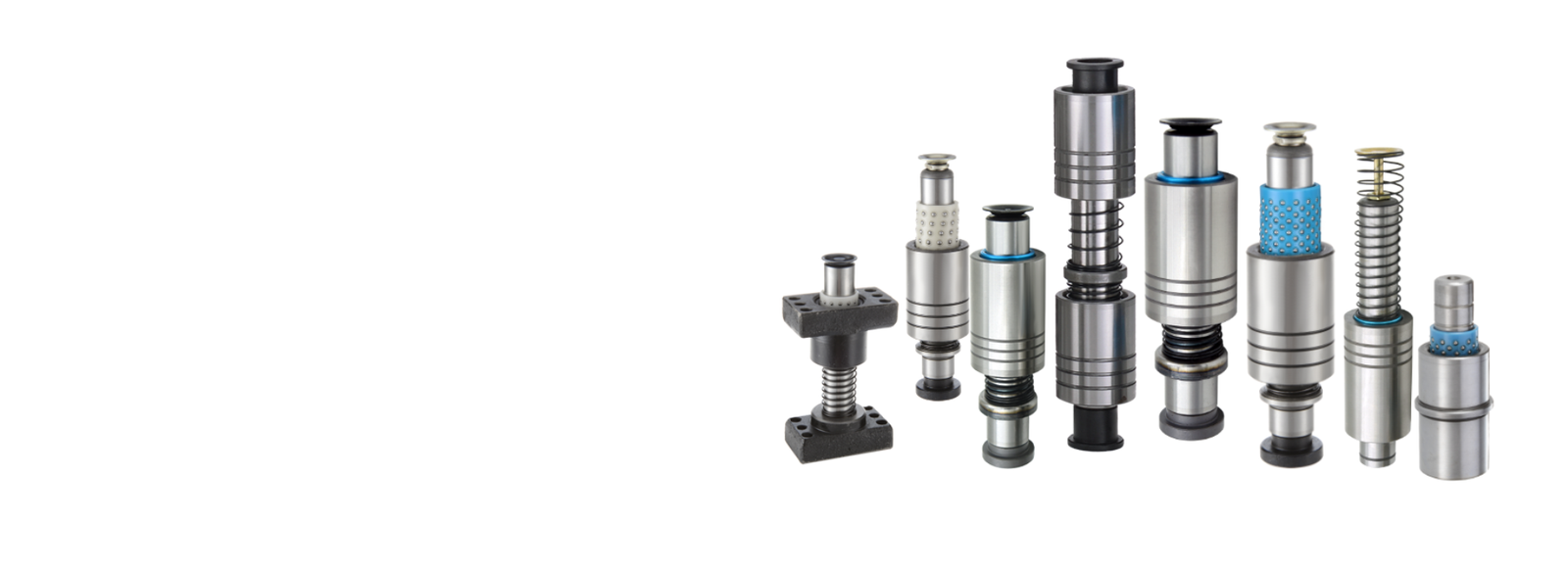
Your Trusted Partner for Guide Pillar and Guide Bush
HTX is dedicated to providing customized guide pillars and guide bushings for stamping dies, injection molds, and various types of precision tooling. Whether you require production based on technical drawings, prototype sampling, or mass manufacturing, we are fully equipped to meet your needs.
We make no extravagant promises; instead, we offer you consistent product quality, practical engineering support, and reliable supply assurance. Simply provide us with your professional drawings, tolerance specifications, and material requirements—and leave the rest to us.
The Types of Our Guide Pillar and Guide Bush
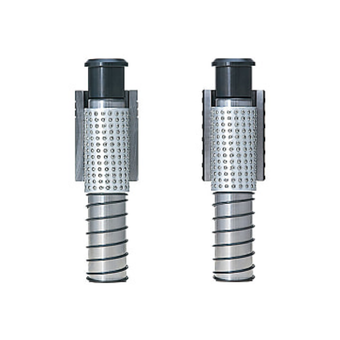
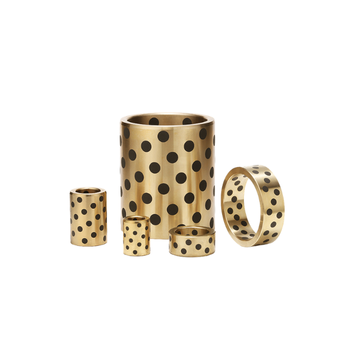
Features exceptional wear resistance and self-lubricating properties.
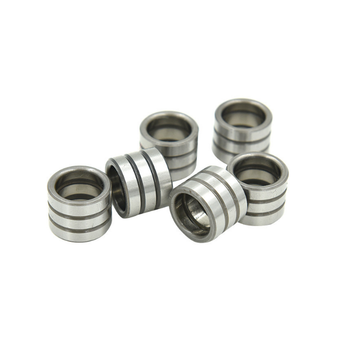
Offer micron-level precision, designed for precision tooling.
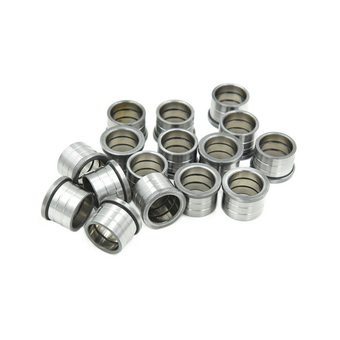
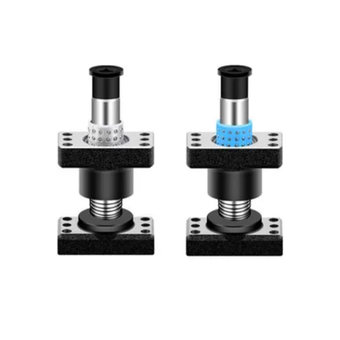
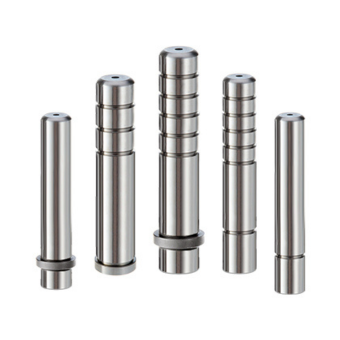
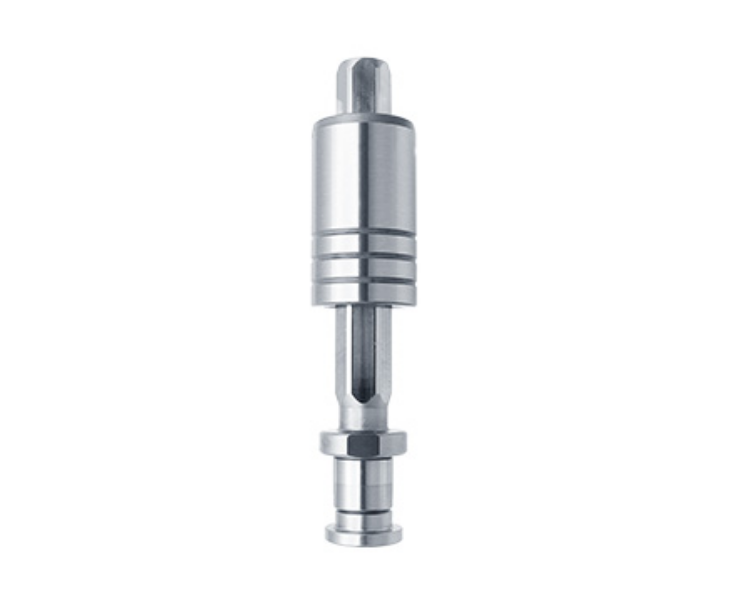
Stripper guide pins are used in stamping dies to guide the ejection plate during punch retraction.
Why Guide Pillar And Guide Bush Systems Matter?

Precision guiding prevents inconsistent stamping results and assembly errors.

High-quality materials prevent rapid wear in high-load production environments.

Proper lubrication solutions prevent the guide post and guide bushing from adhering to each other, which could damage the die.

Stable guiding performance ensures consistent product dimensions.
Heat Treatment for HTX’S Guide Pillar and Guide Bush?
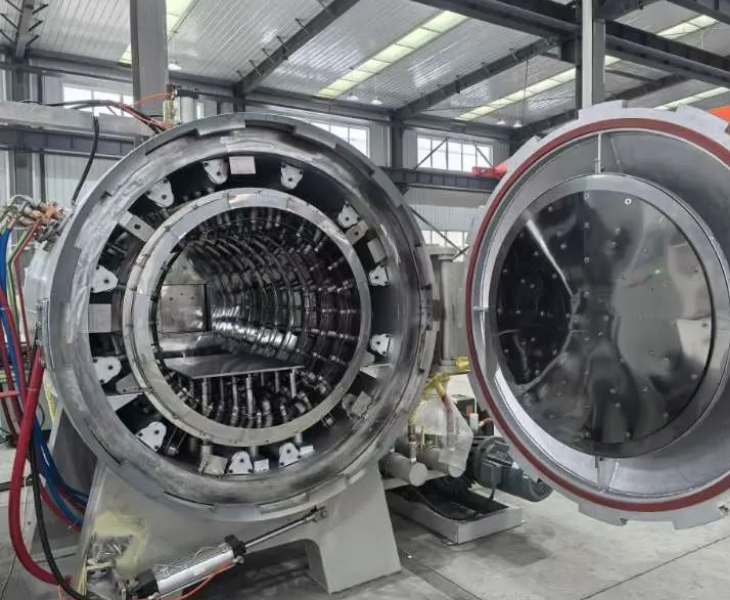
- Hardness and Wear Resistance: The hardness and wear resistance of guide posts and bushings depend not only on the material itself but also on complementary heat treatment processes. HTX employs vacuum heat treatment, maintaining a stable hardness range of HRC 58–62 (adjusted according to specific material requirements). Heating in a vacuum environment prevents surface decarburization and discoloration, ensures uniform hardness, and minimizes the risk of deformation in the guide posts and bushings.
- Following heat treatment, a deep cryogenic treatment (optional) is performed to transform residual austenite into martensite, thereby enhancing dimensional stability and further extending service life.
Precision Machining for Guide Posts & Guide Bushings
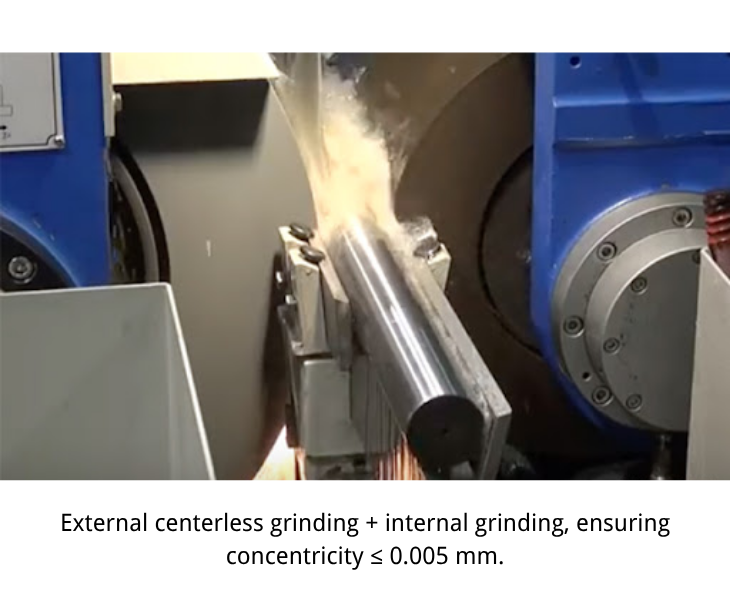
Both the outer diameter of the guide posts and the inner bore of the guide bushings undergo high-precision centerless grinding and internal grinding processes, guaranteeing a concentricity of ≤0.005 mm. This specification is critical; even a slight deviation in concentricity can compromise the alignment between the upper and lower die halves, leading to product burrs and tooling inaccuracies.
Surface Finish for The Guilde Post and Bushings
We achieve a surface roughness of Ra ≤0.2 μm (mirror-finish grade). A superior surface finish ensures a more uniform clearance fit between the guide post and bushing, resulting in smoother motion and preventing issues such as surface galling or seizing.
Custom Guide Pillar And Guide Bush Solutions
While we are capable of manufacturing standard components, this is not our primary focus. Our core expertise lies in helping clients customize guide pillars and guide bushings—specifically those unique parts that cannot be found in standard product catalogs.
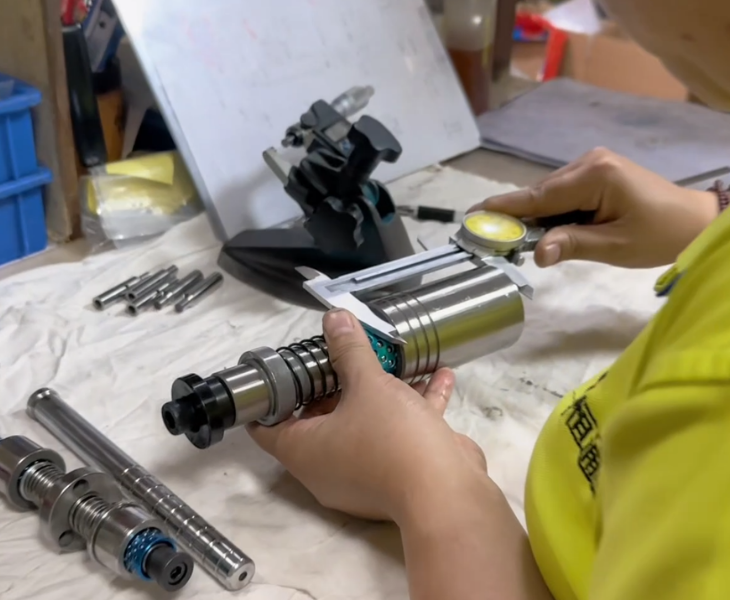
- OEM Customization – We provide 1:1 replication based on the specifications detailed in your provided drawings, including length, shoulder width, fit tolerances, material composition, and hardness.
- Tailored to Your Needs – Whether your mold requires a non-integer diameter, a non-standard length, or involves unique fitting requirements, we can custom-manufacture the components to your exact specifications.
- Rapid Prototyping Service – For urgent requirements involving non-standard guide pillars and bushings, we offer a rapid prototyping service; we will produce samples first, and upon successful mold testing, proceed with full-scale batch production.
Applications Of Guide Post And Busher Systems:

Heavy-duty guiding systems for stamping automotive structural components and chassis parts.
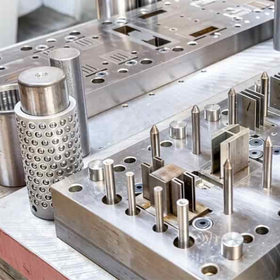
Providing precise positioning for high-speed, precision stamping operations.
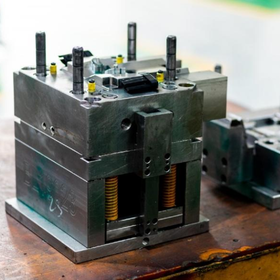
Ensuring smooth mold opening and closing in plastic injection molding applications.
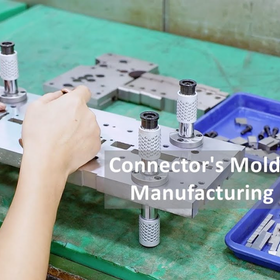
Delivering micron-level precision assurance for electronics and semiconductor mold manufacturing.
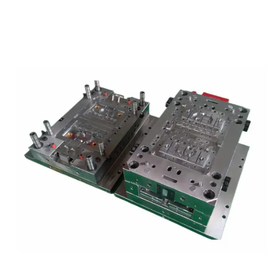
Wear-resistant guiding systems designed for high-cycle battery components.
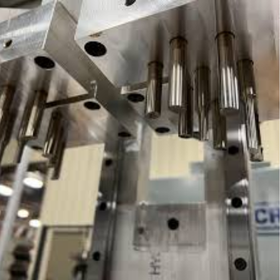
Guide pillars and guide bushings are custom-engineered for specialized tooling and automation systems.
Guide Pillar and Guide Bush Standard Size
- TRP Guide Post Guide Bush
- QBSH QMSH QKSH QB QM QK
- SRP Guide Post Guide Bush
- SR(GBSH GMSH GKSH GB GM GK)
- A-TRP Guide Post Guide Bush
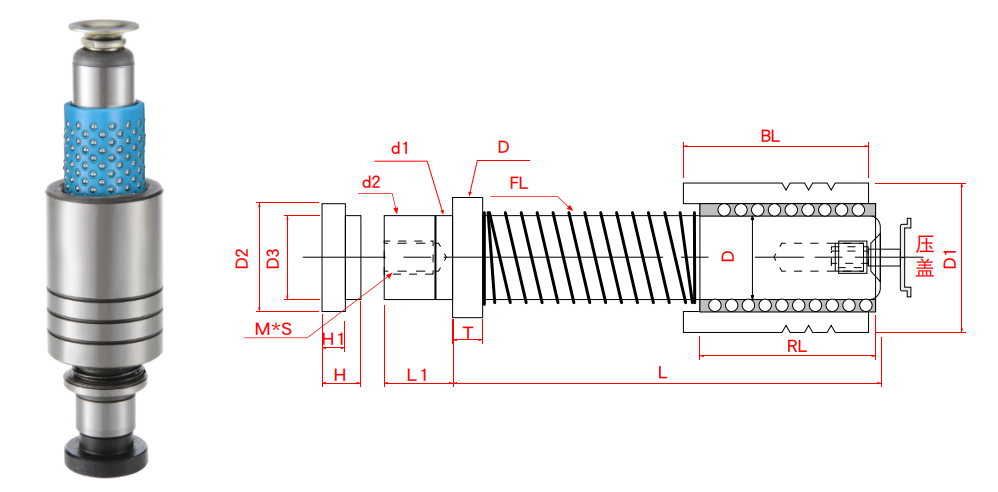
| d | d1 | d2 | D | T | D3 | D2 | H | H1 | L1 | M*S | D1 | BL | |||||
| 20 | +0 -0.006 | +0 -0.005 | -0.03 -0.05 | 30 | 5 | 19 | 28 | 12 | 6 | 15 | M8*20 | 37 | 60-70 | ||||
| 22 | 32 | 8 | 21 | 30 | 16 | 40 | |||||||||||
| 25 | 35 | 24 | 35 | 14 | 7 | 18 | 45 | 70-100 | |||||||||
| 28 | 38 | 10 | 27 | 36 | 20 | 50 | |||||||||||
| 32 | 44 | 31 | 40 | 16 | 8 | 23 | 55 | 80-120 | |||||||||
| 36 | 48 | 35 | 44 | 27 | 58 | ||||||||||||
| 38 | 50 | 12 | 37 | 46 | 27 | 64 | |||||||||||
| 45 | 60 | 44 | 53 | 32 | M12*20 | 74 | |||||||||||
| 50 | 66 | 15 | 49 | 58 | 18 | 9 | 35 | 83 | |||||||||
| 60 | 76 | 59 | 68 | 38 | 95 | ||||||||||||
| Catalog No. Type | L | ②LBB | RL | ||||||||||||||
| Type | BL | ||||||||||||||||
| PBSH PMSH PKSH GBSH GMSH GKSH PB PM PK GB BM GK | 20 | 80 90 100 110 120 130 140 150 160 170 180 200 | L (LBB) | 50 | 50 | ||||||||||||
| 22 | 80 90 100 110 120 | 50 | 50 | ||||||||||||||
| 60 | 60 | ||||||||||||||||
| 25 | 80 90 100 110 120 130 | 60 | 60 | ||||||||||||||
| 60 | 75 | ||||||||||||||||
| 28 | 100 110 120 130 140 150 160 | 60 | 60 | ||||||||||||||
| 80 | 75 | ||||||||||||||||
| 32 | 120 130 140 150 160 | 80 | 75 | ||||||||||||||
| 100 | 90 | ||||||||||||||||
| 38 | 140 150 160 170 180 | 80 | 75 | ||||||||||||||
| 100 | 90 | ||||||||||||||||
| 45 | 140 150 160 170 180 | 100 | 90 | ||||||||||||||
| 120 | 110 | ||||||||||||||||
| 50 | 160 170 180 200 | 100 | 90 | ||||||||||||||
| 120 | 110 | ||||||||||||||||
| 60 | 160 170 180 200 | 100 | 90 | ||||||||||||||
| 120 | 110 | ||||||||||||||||
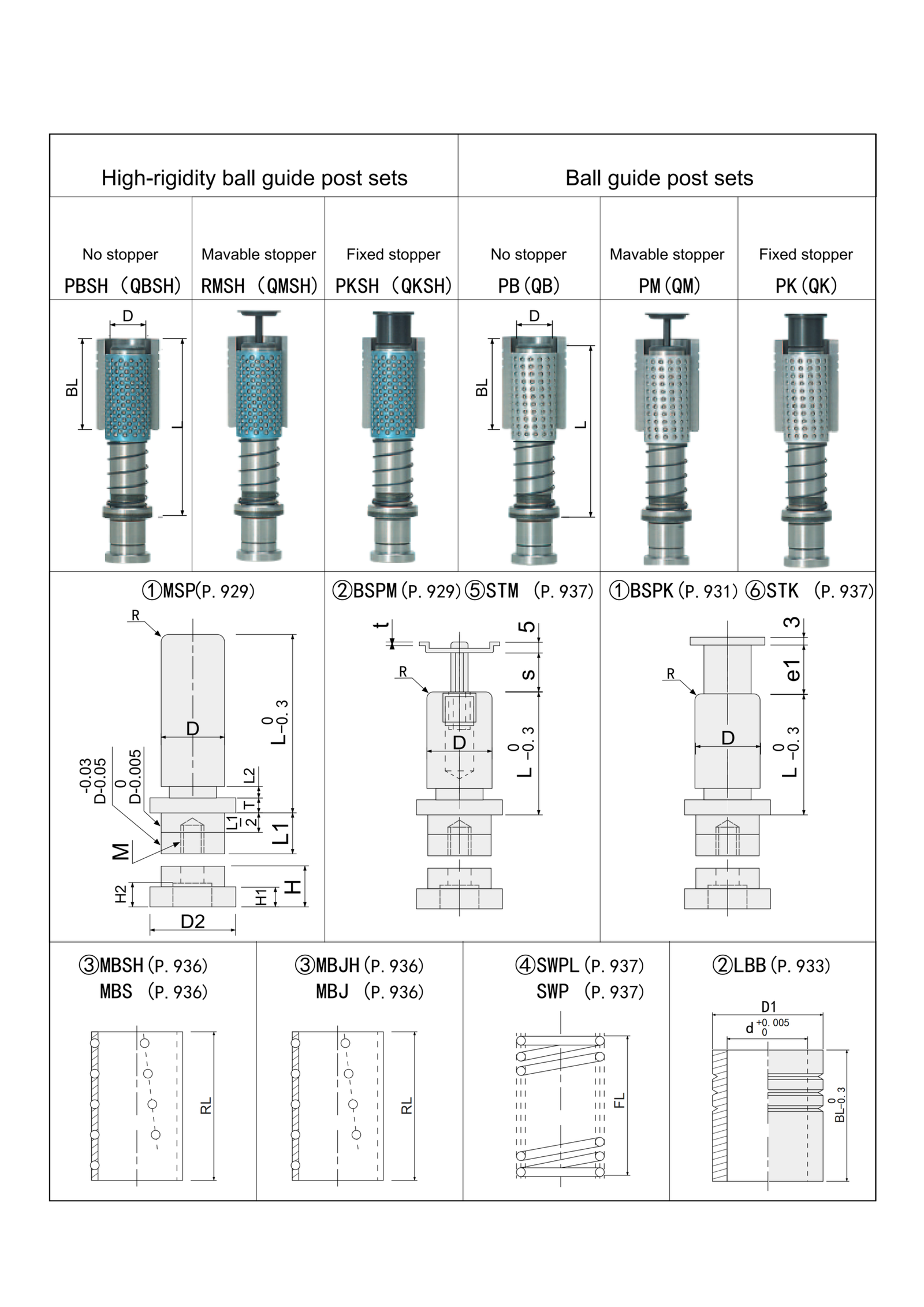
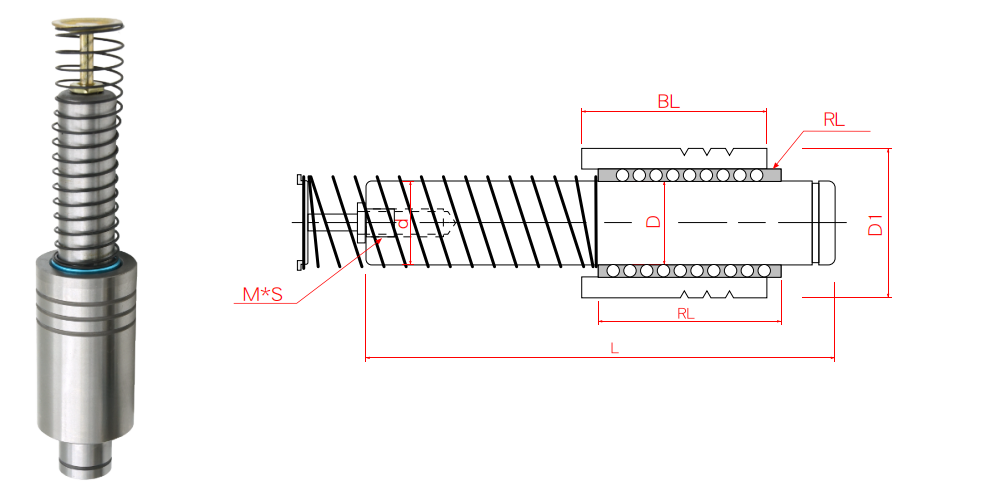
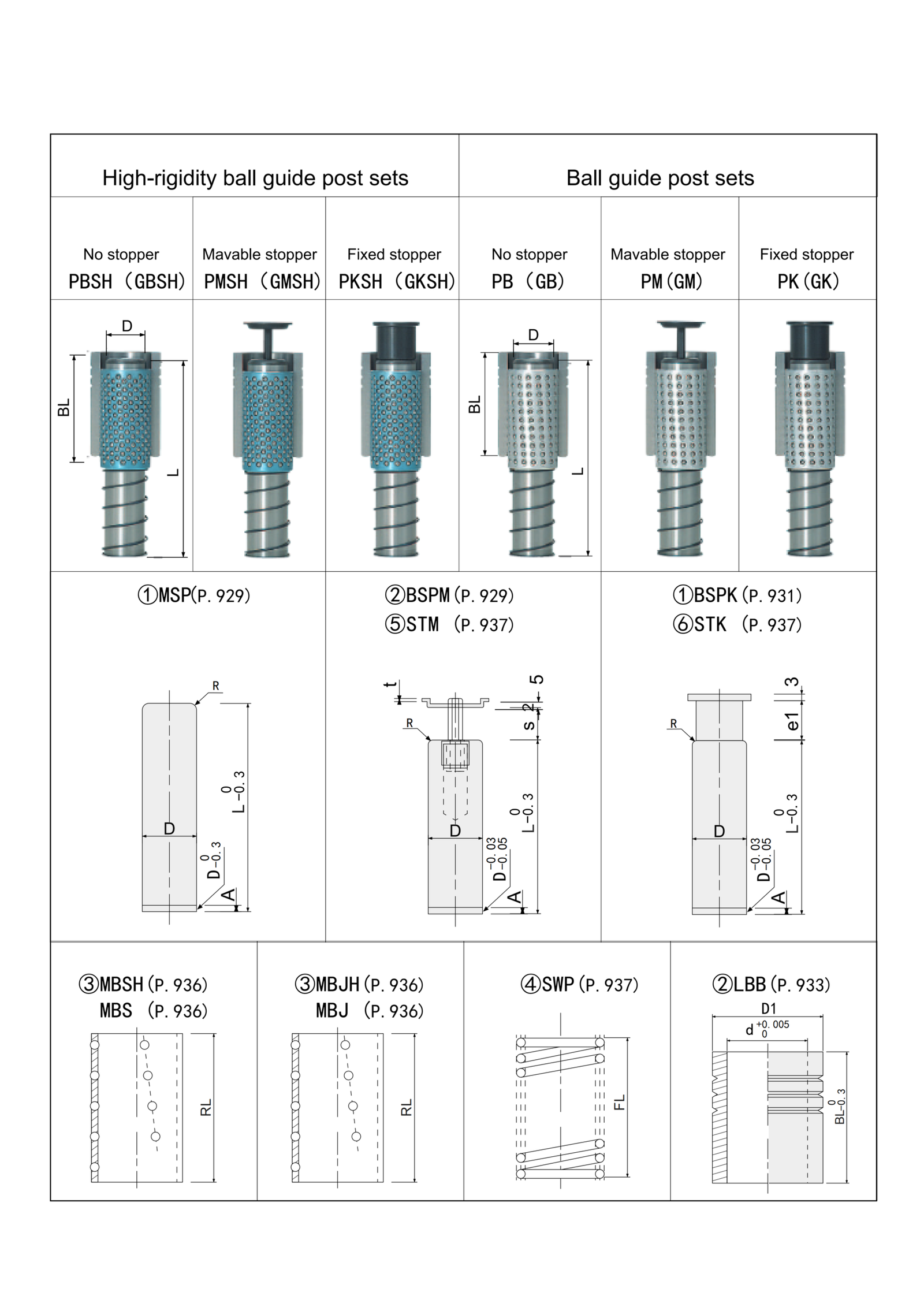
| D | d | M*S | D1 | RL | BL | |||||
| 20 | -0.020 -0.025 | +0.020 +0.025 | M6*15 | 37 | 50 | 50 | ||||
| 22 | 40 | 50 | 50 | |||||||
| 60 | 60 | |||||||||
| 25 | +0.025 +0.030 | M8*20 | 44 | 60 | 60 | |||||
| 60 | 75 | |||||||||
| 28 | 48 | 60 | 60 | |||||||
| 80 | 75 | |||||||||
| 32 | -0.030 -0.035 | 54 | 80 | 75 | ||||||
| 100 | 90 | |||||||||
| 38 | 63 | 80 | 75 | |||||||
| 100 | 90 | |||||||||
| 45 | M12*20 | 74 | 100 | 90 | ||||||
| 120 | 110 | |||||||||
| 50 | 78 | 100 | 90 | |||||||
| 120 | 110 | |||||||||
| 60 | 88 | 100 | 90 | |||||||
| 120 | 110 | |||||||||
| Catalog No. | L | ②LBB Type | RL | |||||||
| Type | D | |||||||||
| PBSH PMSH PKSH GBSH GMSH GKSH PB PM PK GB BM GK | 20 | 100 110 120 130 140 150 160 170 180 | L (LBB) | 50 | 50 | |||||
| 22 | 120 130 140 150 160 170 180 | 50 | 50 | |||||||
| 60 | 60 | |||||||||
| 25 | 120 130 140 150 160 170 180 | 60 | 60 | |||||||
| 60 | 75 | |||||||||
| 28 | 140 150 160 170 180 200 | 60 | 60 | |||||||
| 80 | 75 | |||||||||
| 32 | 160 170 180 200 220 240 | 80 | 75 | |||||||
| 100 | 90 | |||||||||
| 38 | 180 200 220 240 260 | 80 | 75 | |||||||
| 100 | 90 | |||||||||
| 45 | 180 200 220 240 260 | 100 | 90 | |||||||
| 120 | 110 | |||||||||
| 50 | 200 220 240 260 | 100 | 90 | |||||||
| 120 | 110 | |||||||||
| 60 | 200 220 240 260 | 100 | 90 | |||||||
| 120 | 110 | |||||||||
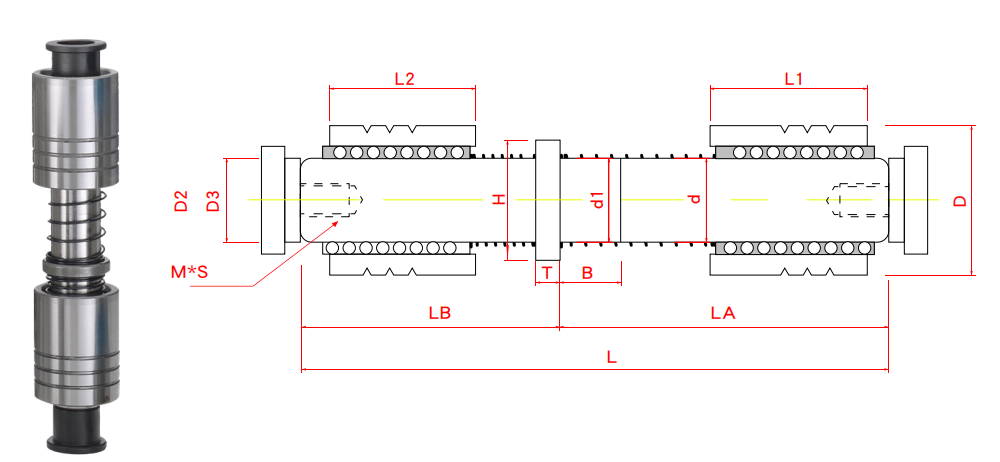
| d | d1 | H | B | D | M*S | ||||||||
| 16 | -0.010 -0.015 | 16 | +0.010 +0.015 | 23 | 20 | 28 | M6*20 | ||||||
| 18 | 18 | 25 | 30 | M8*20 | |||||||||
| 20 | 20 | 27 | 34 | M8*20 | |||||||||
| L | LA | LB | T | L1 | L2 | ||||||||
| 120 | 65 | 55 | 5 | 35 | 30 | ||||||||
| 130 | 7 | 60 | 40 | 35 | |||||||||
| 140 | 80 | 60 | 40 | 35 | |||||||||
How To Choose The Right Guide Pillar And Guide Bush?
Determine the Mold Type: Is it a Stamping Die, an Injection Mold, or a Progressive Die?
Stamping Die: Guide pillars and bushes primarily withstand lateral forces and impact loads.
Injection Mold: Requires high guiding precision, but the load is relatively low.
Progressive Die: Involves high speed and high precision, demanding the highest standards for concentricity and surface finish.
Select the Material
SUJ2 (Bearing Steel): The preferred general-purpose choice; offers sufficient hardness, excellent wear resistance, and a more economical price point.
SKD11: Recommended for molds subject to heavy impact loads or prone to chipping at the corners, as SKD11 offers superior toughness.
Bronze (Bronze Bushing): Features graphene-enhanced self-lubrication; typically paired with steel guide pillars for applications where external lubrication is not feasible.
Assess the Working Load
Light Load: Small molds, thin-sheet stamping, injection molds—use standard steel guide pillars paired with bronze bushings.
Medium Load: General stamping, single-station dies—use SUJ2 or SKD11; select a middle-range value for the guide pillar-bushing clearance.
Heavy Load: Thick-sheet stamping, large molds, continuous dies—recommend SKD11 or cemented carbide; slightly increase the clearance between the guide pillar and bushing.
Select the Lubrication Method
Grease Lubrication: Suitable for scenarios where regular re-lubrication is possible; offers the safest, most reliable performance and the longest service life.
Self-Lubricating Bronze Bushing: Ideal for applications where external lubrication is impossible or where there is a risk of forgetting to lubricate; the bronze bushing contains embedded graphite or solid lubricants.
Confirm the Tolerance Grade
Standard: General stamping, mold trials, low-requirement applications—Concentricity: 0.01–0.02 mm.
Precision: High-speed stamping, multi-station progressive dies—Concentricity: ≤0.008 mm; Surface Roughness (Ra): ≤0.2.
Ultra-Precision: Optical molds, electronic connector molds—Concentricity: ≤0.005 mm; Surface Roughness (Ra): ≤0.1.
SUJ2 (bearing steel) offers the best cost-performance ratio, with a hardness of HRC58–62, making it suitable for the vast majority of stamping dies. For applications involving high impact or a risk of chipping, SKD11 is the preferred choice. For applications where lubrication is not feasible—such as those involving low speeds and heavy loads—self-lubricating bronze alloy bushings should be selected. For applications requiring an extremely long service life, guide pillars made directly from carbide can be used; a single set can last for the entire lifespan of the die until it is scrapped.
The standard clearance depends on the guide pillar’s diameter and the specific operating conditions. For guide pillars with a diameter of 20–40 mm, the recommended fit clearance is 0.010–0.020 mm (a sliding fit). For high-speed stamping applications, the lower end of this range is preferred (0.008–0.015 mm), while for heavy-duty stamping, the upper end is recommended (0.020–0.030 mm).
If the clearance is too small, it increases the risk of galling (scoring); if it is too large, it compromises alignment accuracy. When manufacturing custom, non-standard sizes, we recalculate the fit specifications based on your specific mold speed and load requirements.
Hardness, surface finish, and lubrication are the three key factors. Ensure a hardness of HRC 58–62, a surface finish of Ra ≤ 0.2 μm, and an appropriate clearance fit; additionally, apply lithium-based grease periodically. If operating conditions do not permit frequent lubrication, utilize self-lubricating bronze guide bushings.
Bronze bushes, which utilize sliding friction, offer high load-bearing capacity, excellent shock resistance, and superior rigidity. However, they require lubrication and can generate heat at high speeds; they are therefore best suited for heavy-duty stamping operations and large-scale molds.
Ball-bearing bushes, which utilize rolling friction, feature an extremely low coefficient of friction, allow for high-speed operation, and generate minimal heat. However, their load-bearing capacity is lower than that of bronze bushes, and they are relatively sensitive to contaminants (such as dust, which can easily cause jamming). They are ideal for high-speed, light-load, and precision stamping applications.
The service life of guide pillars and bushings depends on the materials used, the applied load, and maintenance practices. A high-quality set consisting of SUJ2 guide pillars paired with bronze bushings can reliably withstand 5 to 10 million cycles under normal lubrication conditions. Using SKD11 steel or carbide materials can effectively double this lifespan.
However, if operational issues—such as excessive clearance growth or surface scoring—occur during use, the service life will be significantly reduced. We have encountered instances where customers using inferior guide pillars saw them fail after just 200,000 cycles; conversely, we have also seen our custom-manufactured components continue to operate smoothly even after reaching 20 million cycles.
Yes, they are compatible. We are well-versed in common standards such as MISUMI, DIN, and JIS. If you provide us with the standard model number, we can manufacture a new set for you based on the corresponding dimensions and tolerances—often with even greater precision. While we typically do not keep standard parts in stock, we can certainly recommend alternative suppliers if you specifically require off-the-shelf inventory. We strongly encourage you to consider our custom manufacturing service, as the standard parts used in most molds are often compromises rather than optimal solutions.
Standard guide posts are cost-effective and generally available in stock; the primary advantage of custom guide posts is their ability to be tailored to specific mold requirements, allowing for precise matching of dimensions, tolerances, and materials.
Guide bushings should be replaced when the clearance exceeds the tolerance range, abnormal wear is observed, or they can no longer maintain alignment precision.
For high-volume production molds, custom guide pillars can reduce maintenance costs and extend mold life, thereby lowering overall operating costs.
Material, Hardness, Wear Resistance and Typical Application
| Material | Hardness (HRC) | Wear Resistance | Typical Applications |
| SUJ2 (Bearing Steel) | 58–62 | High | General stamping dies, best cost-performance |
| SKD11 (Die Steel) | 58–62 | High | High-impact or high-toughness applications, better chip resistance than SUJ2 |
| Bearing Steel | 58–62 | High | Same as SUJ2, equivalent material under different standards |
| Bronze (Copper Alloy) | — | Medium | Self-lubricating, low-speed heavy load or non‑lubricated conditions |
| Carbide | 78–82 (HRA) | Extremely High | Ultra‑high precision, extreme long life dies, maximum wear resistance |