
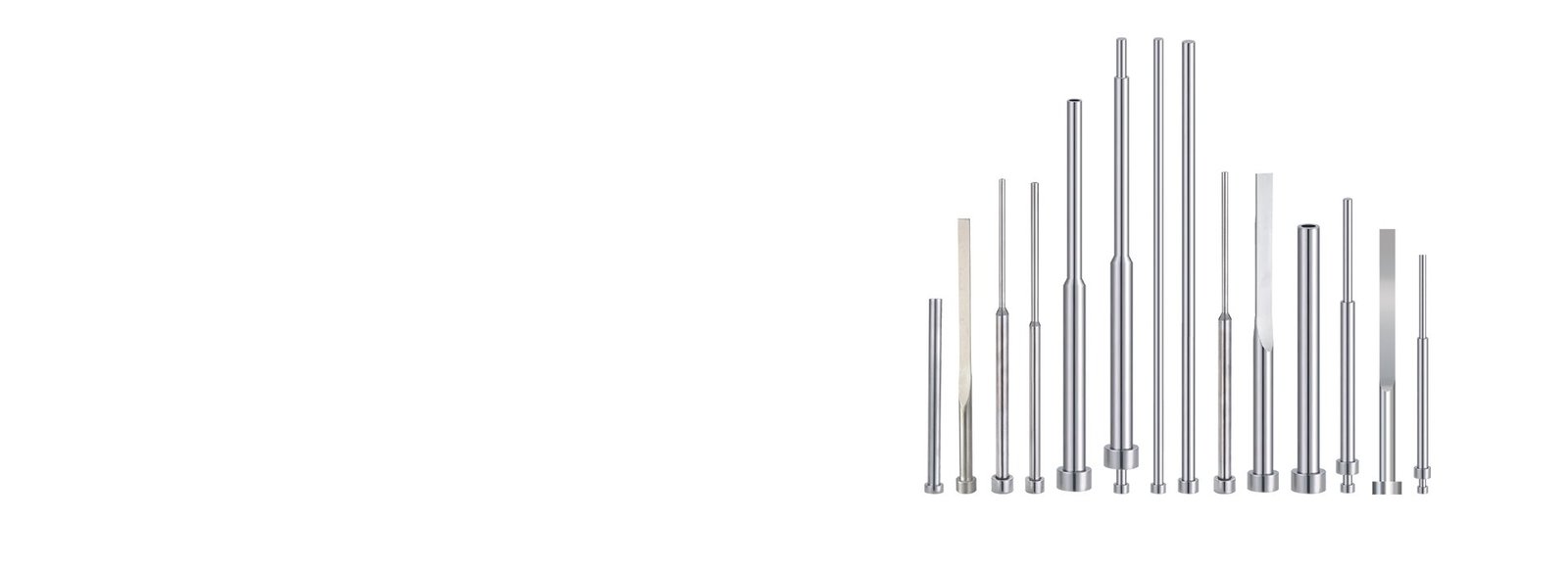
What Are Ejector Pins in Injection Molding?
Mold ejector pins are precision mold components installed in the ejector system of an injection mold. After the plastic part cools and the mold opens, ejector pins apply controlled force to push the molded part away from the core side and complete the demolding process. Also called injection mold ejector pins or knockout pins, they are available in different diameters, lengths, materials, and configurations depending on the mold design and ejection requirements.
The performance of ejector pins directly affects molding stability, part quality, and production efficiency. Proper selection of pin type, diameter, material, and surface treatment helps prevent part deformation, ejector pin breakage, excessive wear, and mold downtime.
HTX Precision provides customized ejector pin solutions for high-cycle injection molding applications, supporting different mold structures, plastic materials, and production requirements.
Common Ejector Pin Types in Injection Molding
Select the suitable ejector pin type based on the mold structure and product characteristics.
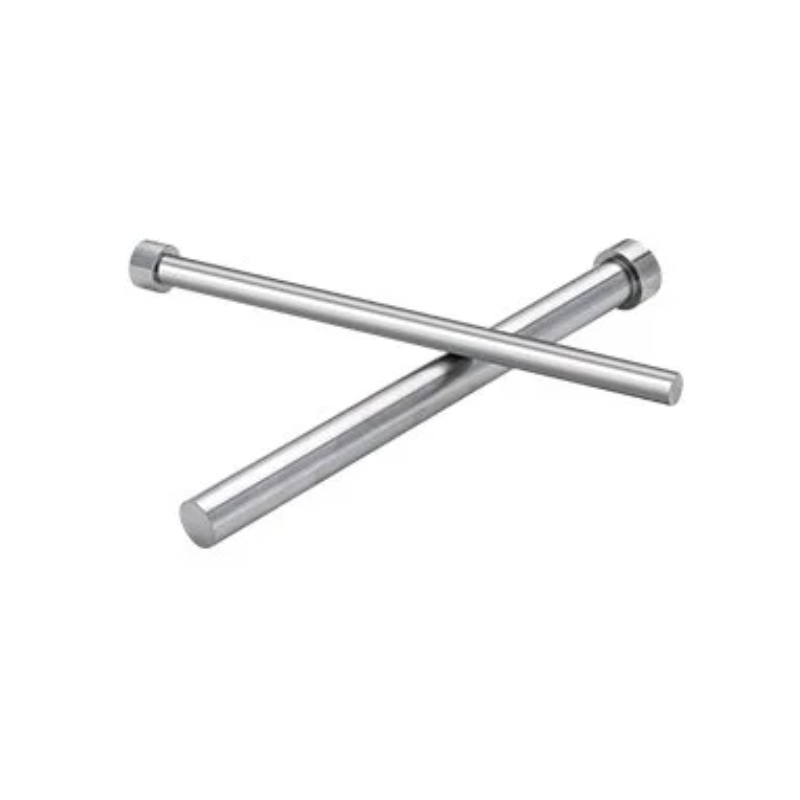
The most commonly used standard ejector pins for general injection molding applications. Their simple cylindrical design provides reliable ejection performance and easy replacement for conventional molds.
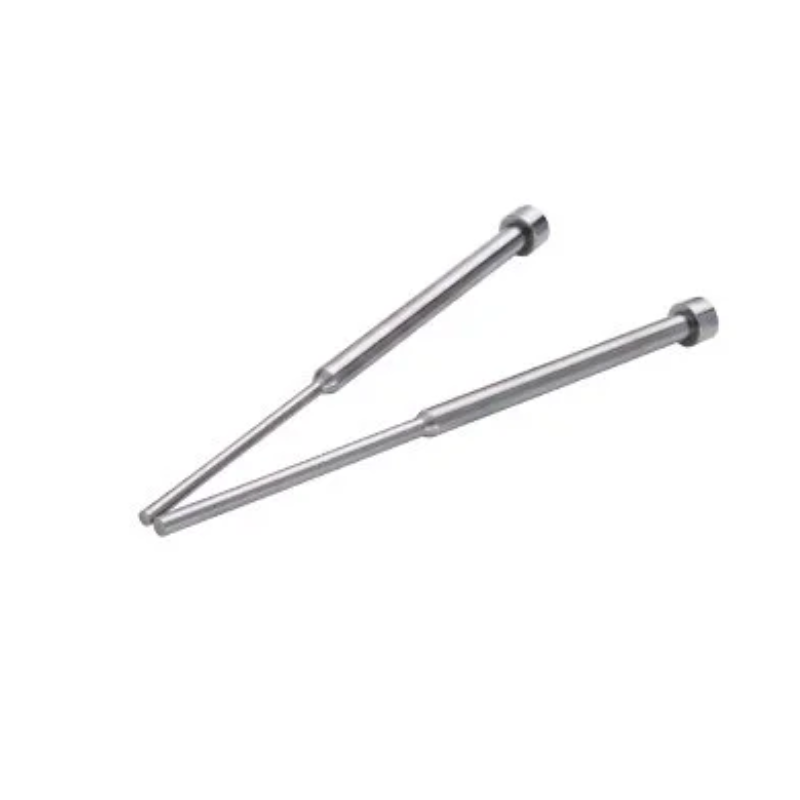
Designed with a stepped structure to provide additional strength while allowing smaller contact areas. Suitable for molds requiring higher rigidity or limited installation space.
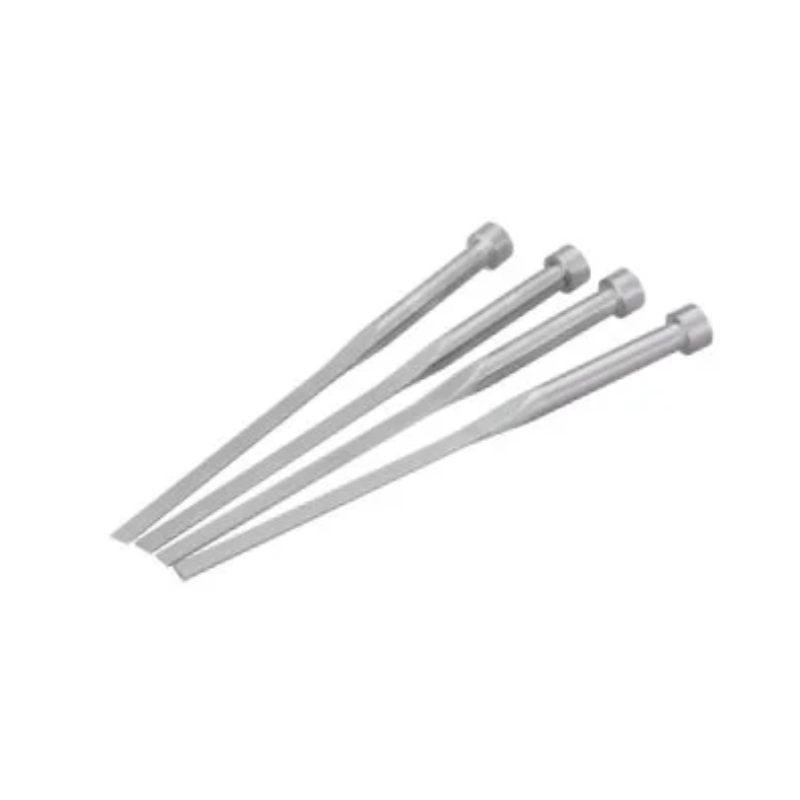
Flat ejector pins are suitable for narrow ribs, thin-walled parts, and limited spaces where standard round pins cannot provide effective ejection.
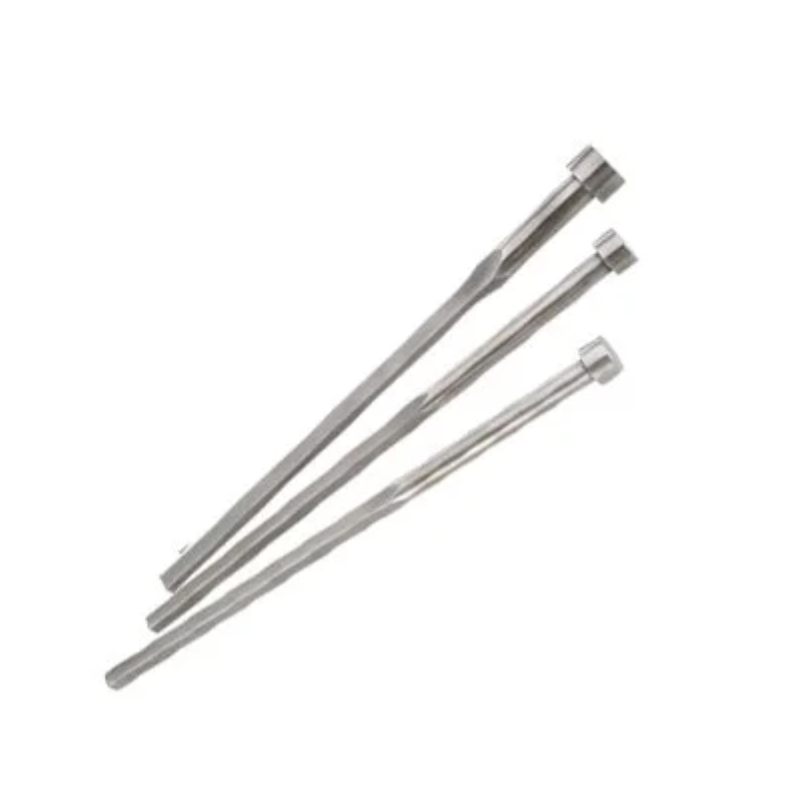
Square ejector pins prevent rotation during operation and are suitable for applications requiring accurate positioning and stable ejection direction.
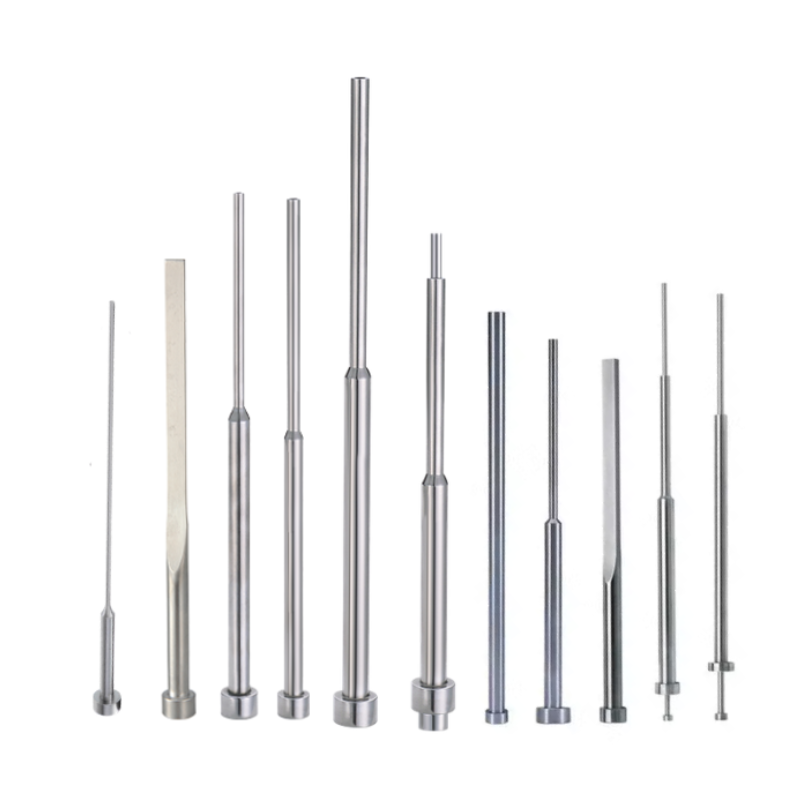
Shoulder ejector pins are designed for injection molds requiring improved guiding stability and resistance to lateral loads. The integrated shoulder structure helps control axial movement, reduce bending risk, and maintain reliable ejection performance in high-precision or long-stroke applications.
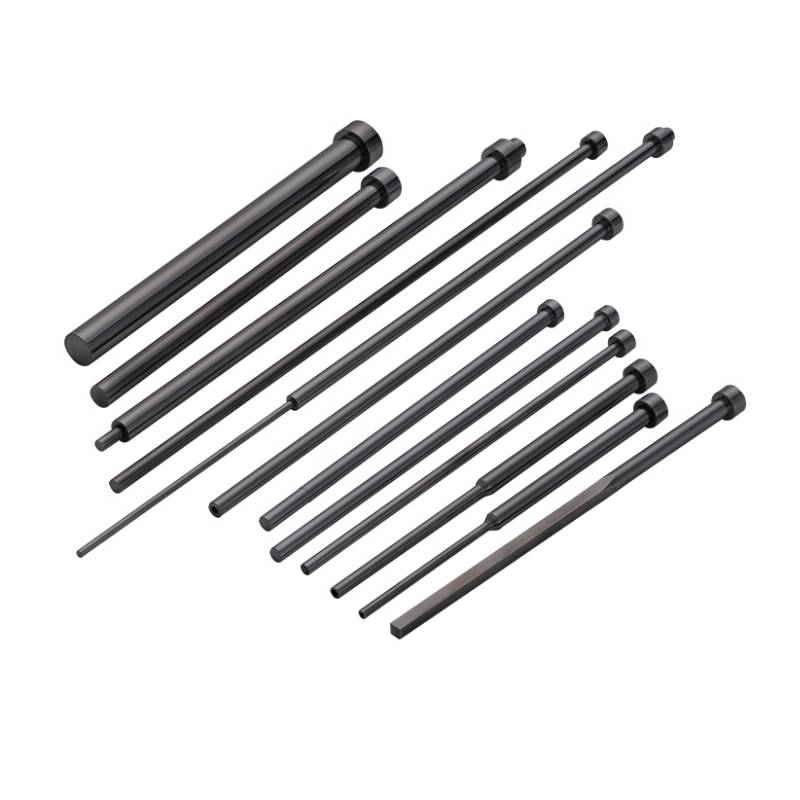
Nitrided ejector pins are surface-treated ejector pins designed for high-cycle production environments. The nitrided layer improves surface hardness, wear resistance, and sliding performance, extending service life in demanding injection molding applications.
How to Choose the Right Ejector Pin for Injection Molding
The right ejector pin depends on your production volume, resin type, and mold environment. The material should match the application.
Need help choosing the right ejector pin size? Read our selection guide to learn about diameter, quantity, and placement.
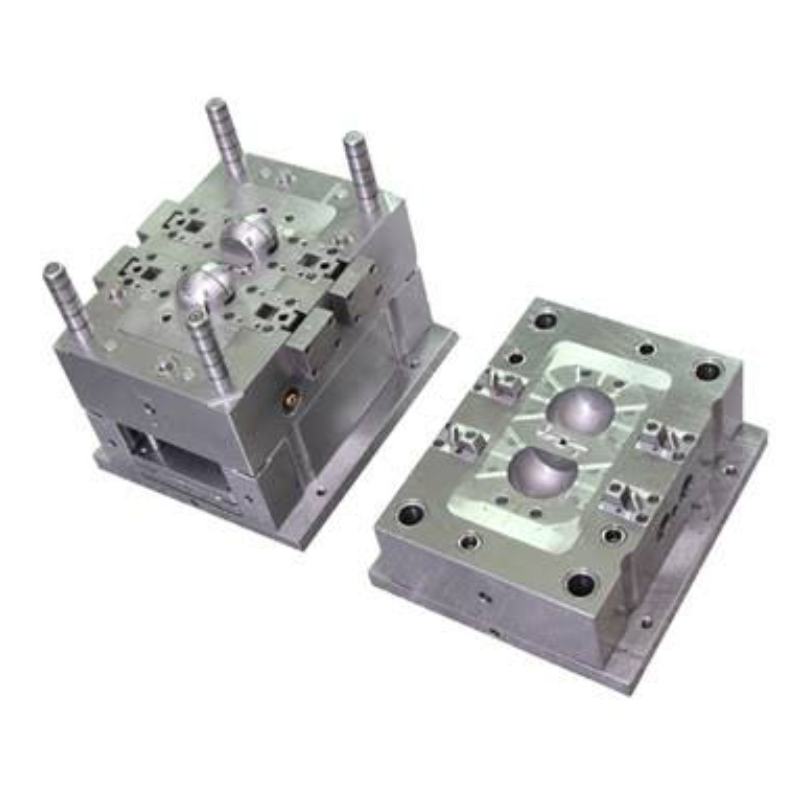 General Injection Molding
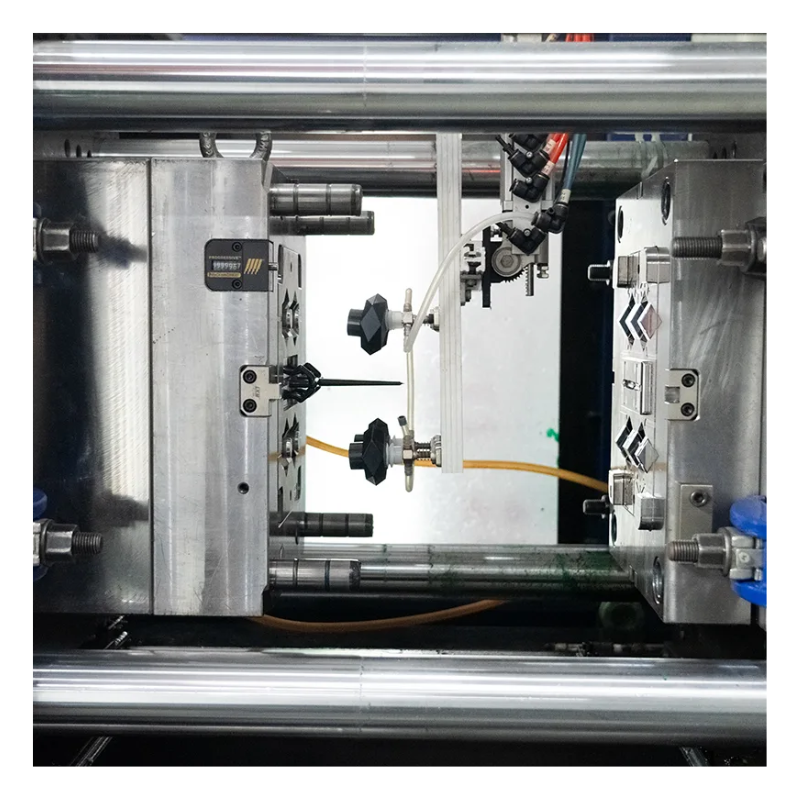
For standard injection molding, SKD61 (H13) ejector pins strike a good balance between hardness, toughness, and cost, capable of withstanding typical mold temperatures and cycle rates.
 High Cycle Production
When molds undergo millions of cycles, hot hardness and wear resistance are particularly important. SKH51 high-speed steel or nitrided ejector pins can extend surface life and maintain dimensional stability during continuous thermal cycling.
 Glass-Filled / Mineral-Filled
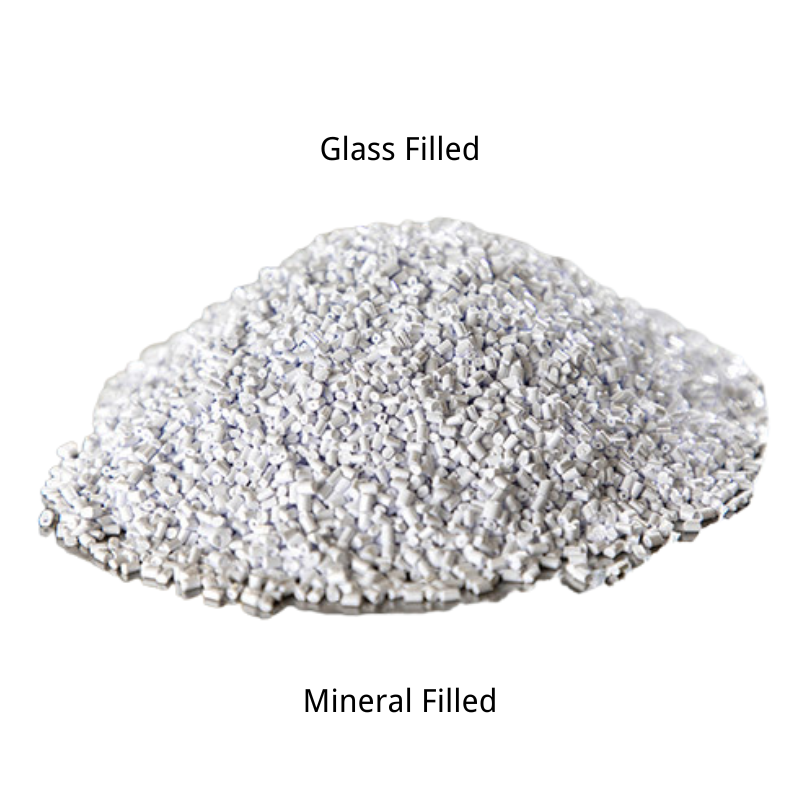
The extremely high surface hardness of carbide ejector pins resists wear from glass-filled, mineral-filled, or abrasive resins, maintaining consistent ejection performance during continuous production.
 Corrosion Environment
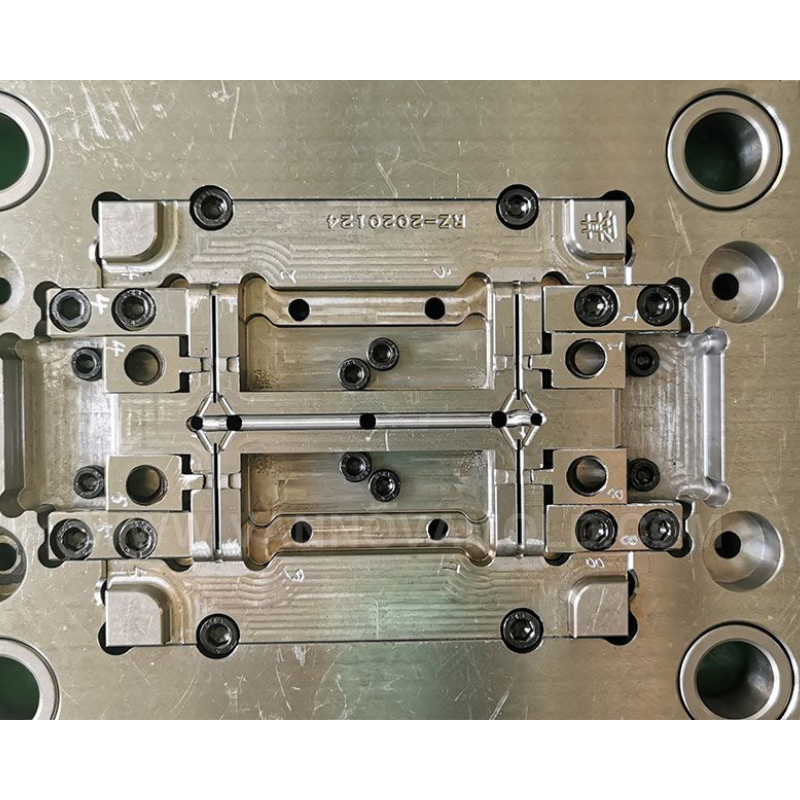
Stainless steel ejector pins are suitable for molds used in PVC processing or humid environments, effectively preventing corrosion.
Key Performance Benefits of Injection Mold Ejector Pins
High-precision ejector pins are designed for stable, efficient, and long-life ejection.

To ensure stable demolding and product quality, HTX places special emphasis on precise control during the ejection process, effectively preventing ejection whitening and deformation, and significantly improving yield.

Superior material properties and surface treatment processes give the ejector pins excellent wear resistance, making them particularly suitable for high-frequency, high-load ejection operations, extending their service life.

Proper material selection, heat treatment, and dimensional control improve bending resistance and reduce the risk of ejector pin breakage during high-cycle production.

Strict control of dimensional accuracy ensures consistent ejection action across all cavities, making it especially suitable for multi-cavity precision molds, ensuring consistency and stability in mass production.
Solution of HTX Ejector Pins in Injection Molding
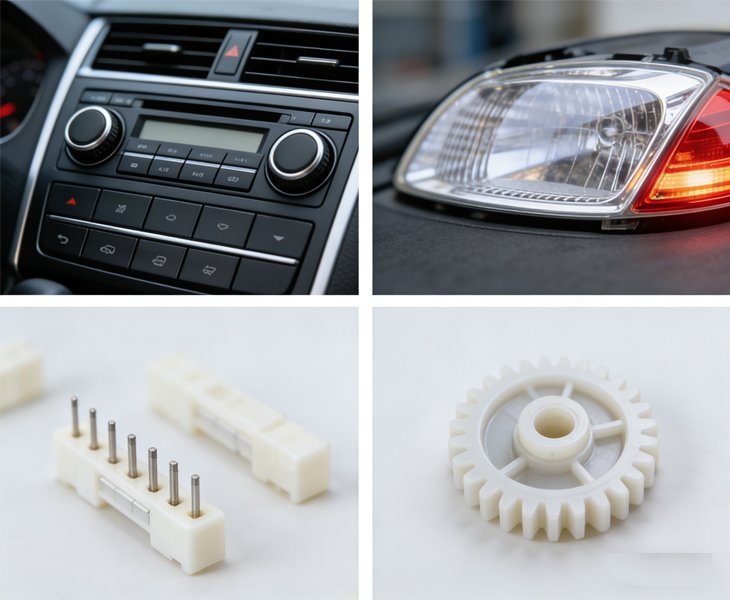
Based on the actual operating requirements of injection molds, HTX consistently adheres to high standards of process control in ejector pin manufacturing. We not only scientifically select materials such as SKD61 and stainless steel as base materials, but also offer surface strengthening treatments such as nitriding to improve the wear resistance and service life of the ejector pins, catering to different application needs. Simultaneously, we strictly control the straightness and surface condition of the ejector pins to ensure smooth and reliable operation in the mold and support stable batch delivery of high-precision, multi-specification products. Therefore, HTX ejector pins have been widely used in the production of automotive plastic parts, electronic connectors, and various industrial plastic products.
The Surface Treatment and Material
Material selection directly affects ejector pin durability, wear resistance, and performance under different molding conditions.
- SKD61 / H13 Tool Steel
Suitable for high-temperature and high-cycle injection molding applications due to its excellent toughness, thermal fatigue resistance, and wear performance.
- Stainless Steel
Recommended for applications requiring corrosion resistance, such as molds exposed to moisture or corrosive plastics.
- Nitriding Treatment
Nitriding creates a hardened surface layer that improves wear resistance, reduces friction, and extends service life while maintaining a tough core structure.
It is usually due to improper material selection, uneven ejection force, or wear on the pin surface.
Straight ejector pins have a uniform diameter and are suitable for general applications. Step ejector pins include a larger shoulder section to improve strength while allowing a smaller working tip.
Yes. HTX Precision provides customized ejector pins according to customer drawings, including special diameters, lengths, shapes, materials, and surface treatments.
There is no fixed lifespan—it depends on material, resin type, mold temperature, and maintenance. Under normal conditions with proper lubrication, SKD61 pins can last 500,000 to 1 million cycles. In abrasive resins, carbide pins may run several million cycles, while standard pins wear much faster. The key is matching the pin material to the application and inspecting for wear before failure occurs.
The correct size depends on ejection force, part geometry, pin location, and mold structure. Larger diameter pins provide better resistance to bending, while multiple smaller pins can help distribute force evenly.