
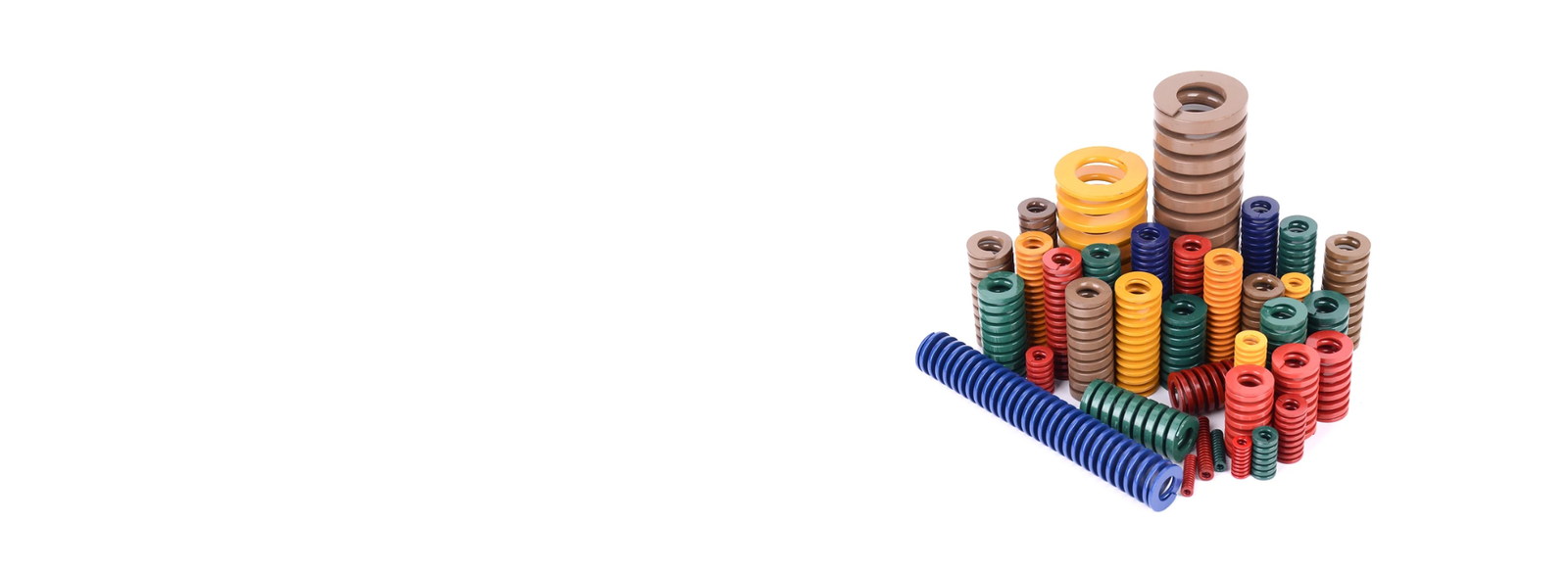
Product Quick Summary
| Feature | Die Springs / Mold Springs |
| Product Type | Rectangular wire compression springs |
| Also Known As | Mold springs, die springs, rectangular springs |
| Primary Function | High-load, short-stroke compression |
| Load Ratings | Extra light, light, medium, heavy, ultra heavy |
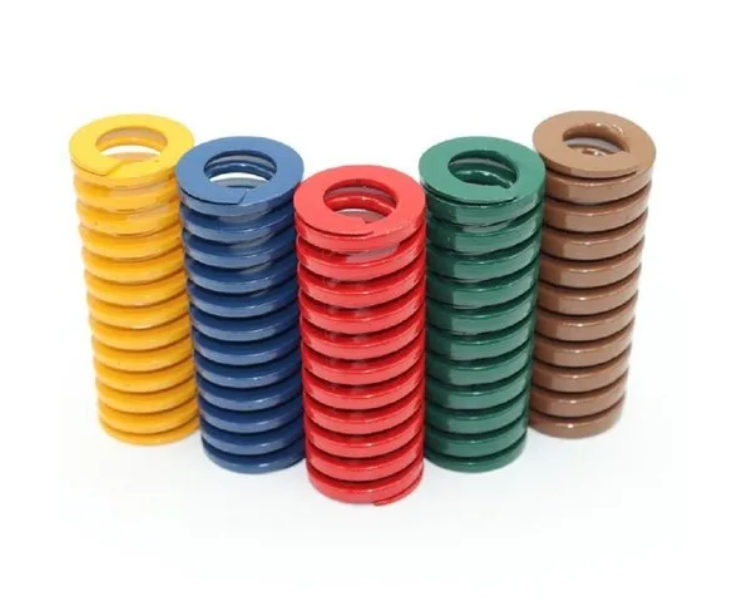
| Color Coding | Yellow, blue, red, green, brown |
| Applications | Injection molds, stamping dies, tooling |
| Options | Standard & custom, including nitrogen gas springs |
| Manufacturing | Per ISO 10243 / JIS specifications |
What Are Die Springs?
Mold springs, also known as die springs, are flat-wire compression springs specifically designed for high-load, short-stroke applications. Unlike standard round-wire springs, their rectangular cross-section packs more material into the same amount of space, delivering greater force within a compact profile.
They are used in ejection systems, mold return systems, and for cushioning and stripper plates. The terms “die spring” and “mold spring” refer to the same product; “die spring” is more commonly used in stamping and metal forming, whereas “mold spring” is widely used in injection mold assemblies.
In most industrial applications, they refer to the same rectangular wire compression spring. The difference is only in naming: “die spring” comes from stamping die applications, while “mold spring” comes from injection mold applications. Specifications, materials, and standards are the same.
HTX’s Die Spring Types
HTX supplies six spring configurations. Click each type for detailed specifications, load ratings, and ordering information.
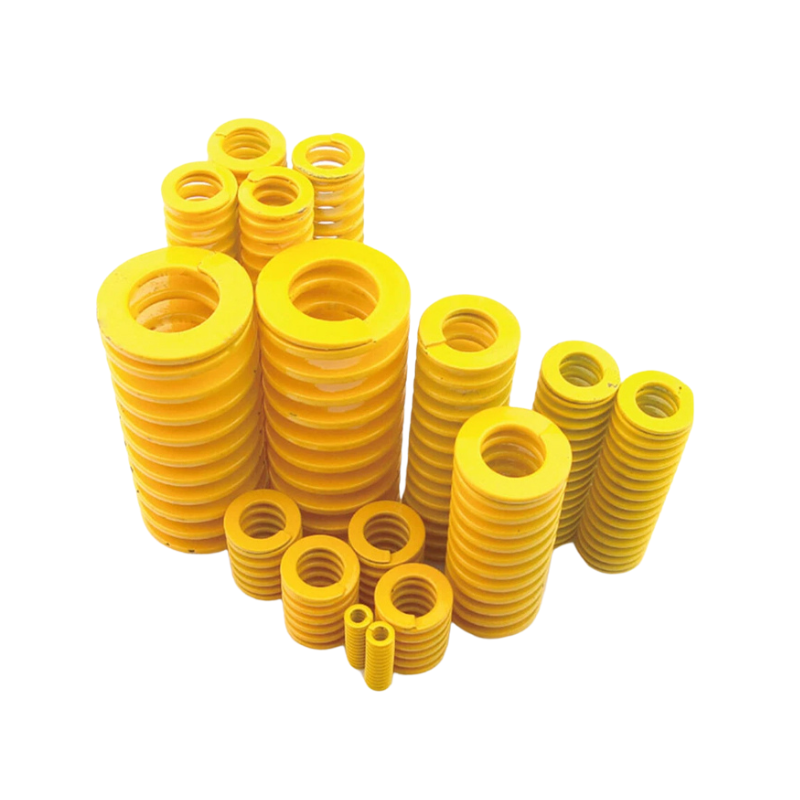
For general-purpose injection molding and light auxiliary applications.
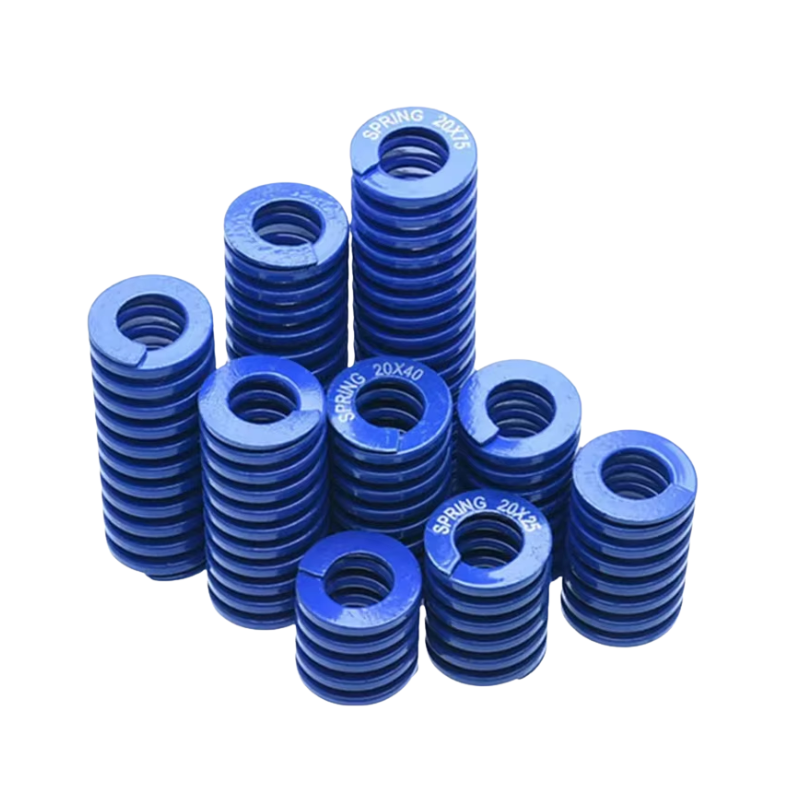
One load level above yellow, suitable for medium-duty injection molds.
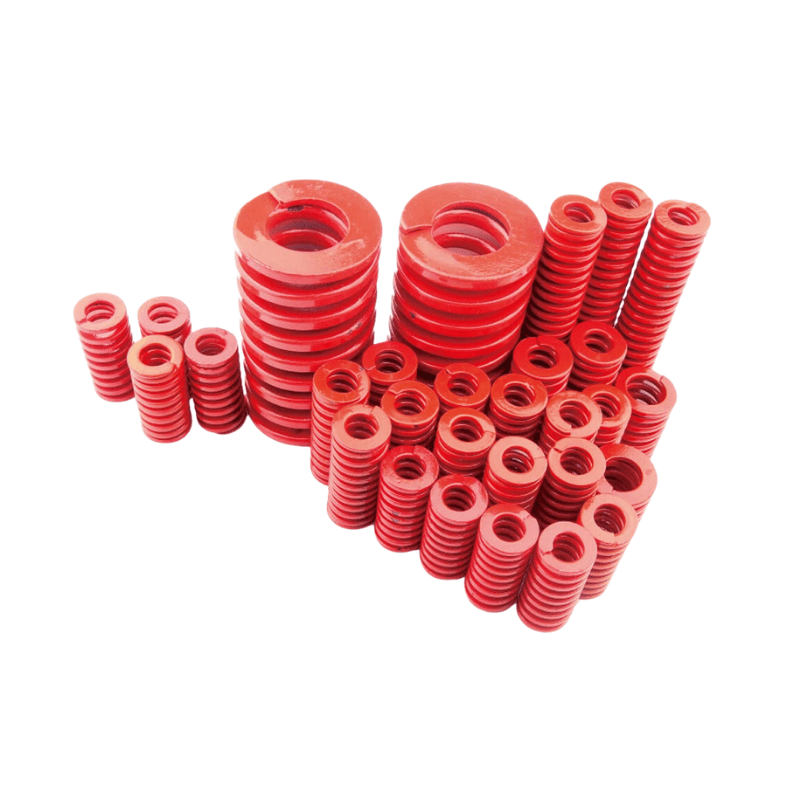
The most commonly used default model, balancing lifespan and force.
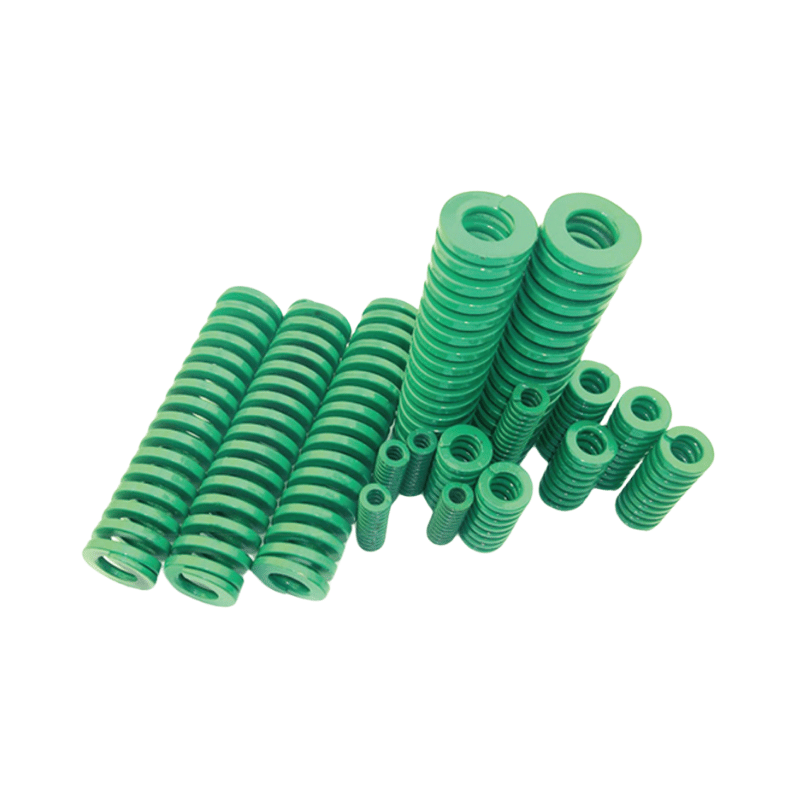
For high-stress environments requiring durable, powerful support.
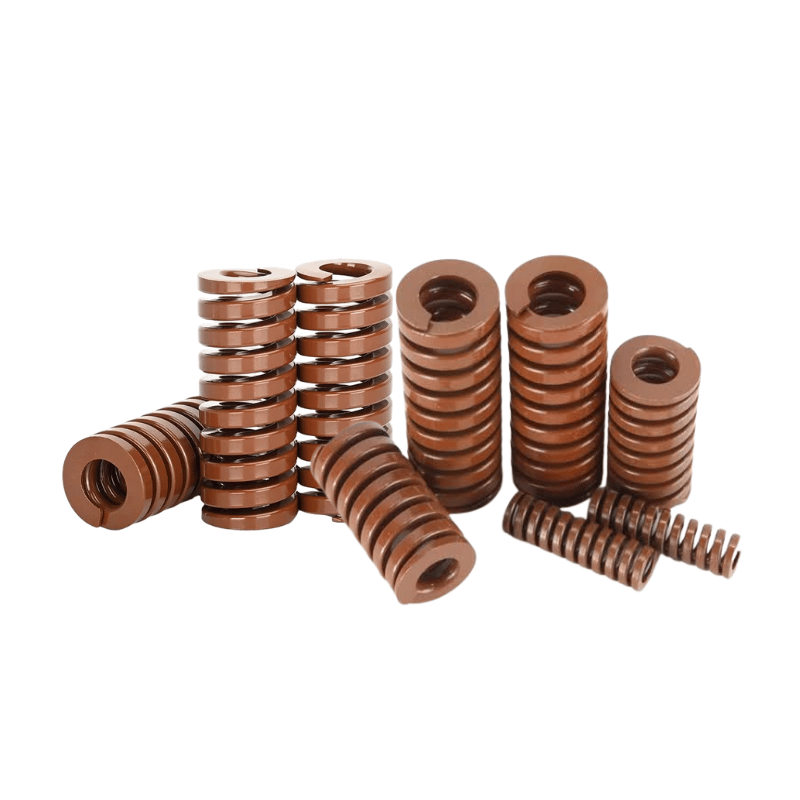
Industrial-grade for extreme conditions with short strokes and ultra-high loads.
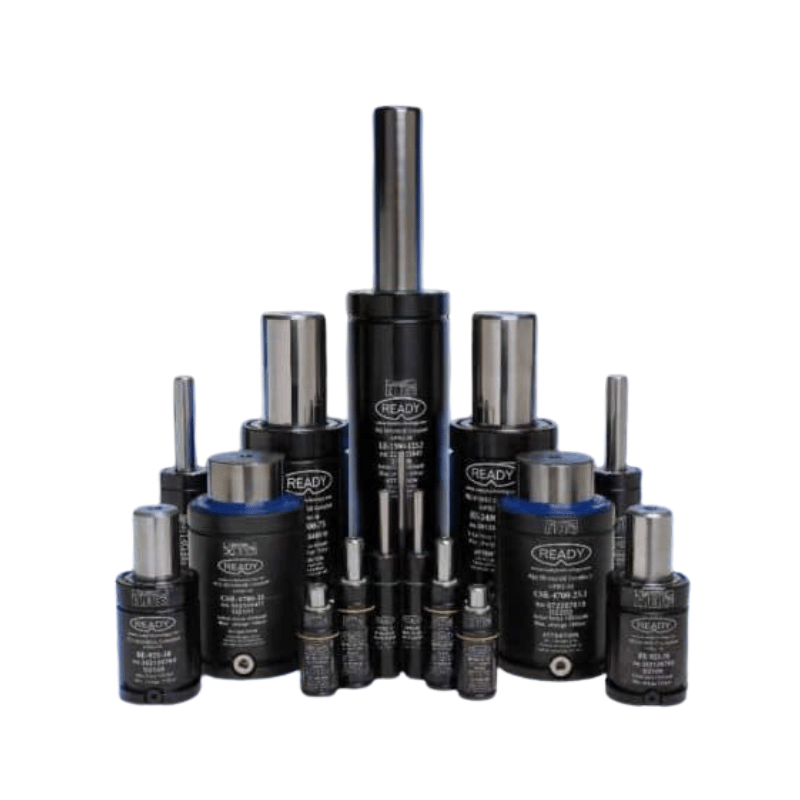
Controlled-force, high-cycle return applications where wire springs reach their limits.
Why Choose HTX Die Springs

From extra light yellow to ultra-heavy brown—matching the output force requirements of different molds.

Load levels are distinguished by color markings, enabling quick selection and clear communication.

Maintains stable elasticity under continuous pressure output, improving mold reliability.

Metric dimensions for easy matching with mold bases and standard components.
How to Choose a Die Spring?
Four factors determine the right die spring:
- 1. Load Requirement
Start with the force your mold needs—not the color. Color is a guide; load is the spec.
- 2. Free Length
Match the available mounting space and required stroke.
- 3. Hole & Rod Diameter
The spring must fit the pocket or guide rod in your mold base.
- 4. Cycle Life
Higher loads relative to free length reduce cycle life. Balance force against longevity.

The Applications of the Die Springs
The die springs are used wherever high force and short stroke are required under repeated cycling.
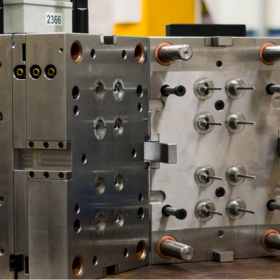
Ejection systems, mold return systems, and cushioning in mold bases.
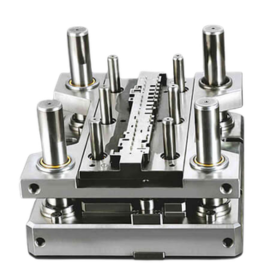
Stripper plates, pressure pads, and material forming systems.
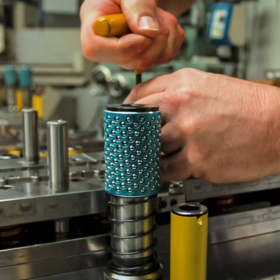
Die Spring Load Categories
| Color | Load Rating | Typical Application |
| Yellow | Extra Light | General injection molding, light auxiliary |
| Blue | Light | Medium-duty injection molds |
| Red | Medium | Default choice, widest range of use |
| Green | Heavy | High-stress mold support |
| Brown | Ultra Heavy | Short stroke, extreme loads |
Match the load requirement, free length, and hole/rod diameter to your mold design. Start with force, then check fit.
Yes. Custom sizes and load requirements can be accommodated. Contact our sales team with your specifications.
The die springs provide force through wire compression with color-coded load levels. Nitrogen gas springs use compressed gas for controlled, high-force return with consistent pressure over a longer stroke.
Need die springs—standard color-coded or custom? Send your load requirements and dimensions. Our team will confirm the right spring for your mold.