
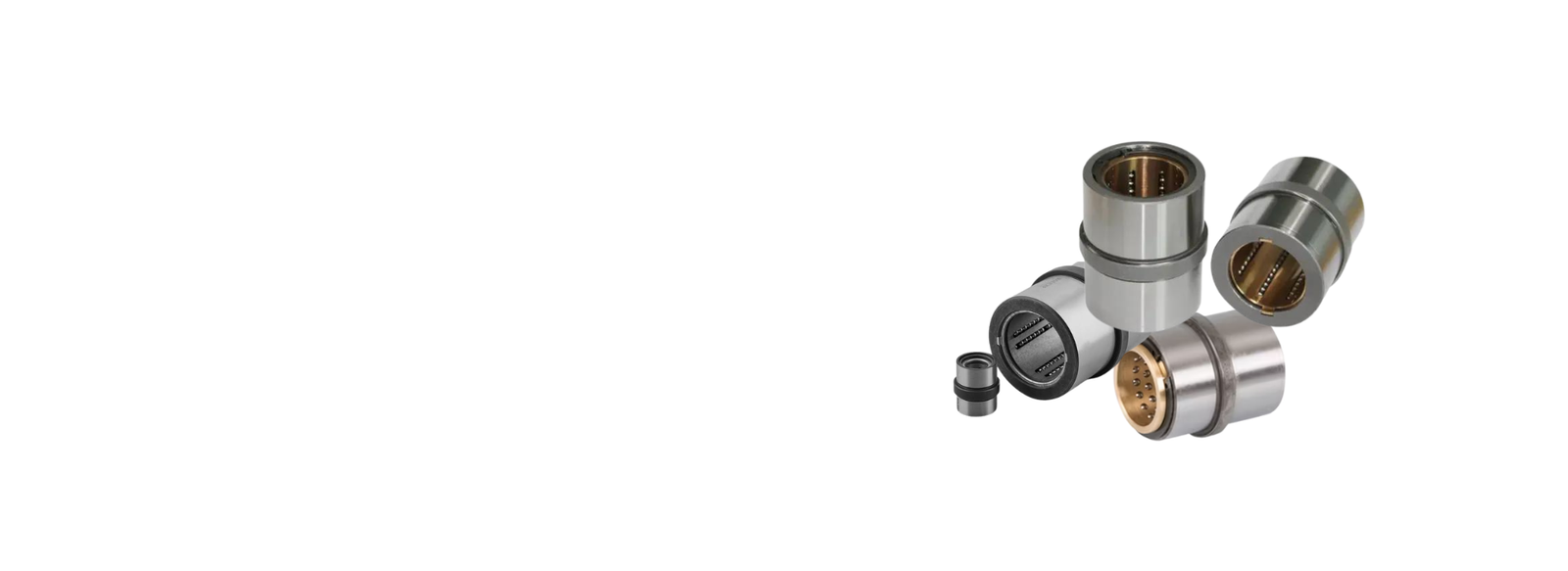
What Is a Ball Bearing Bushing?
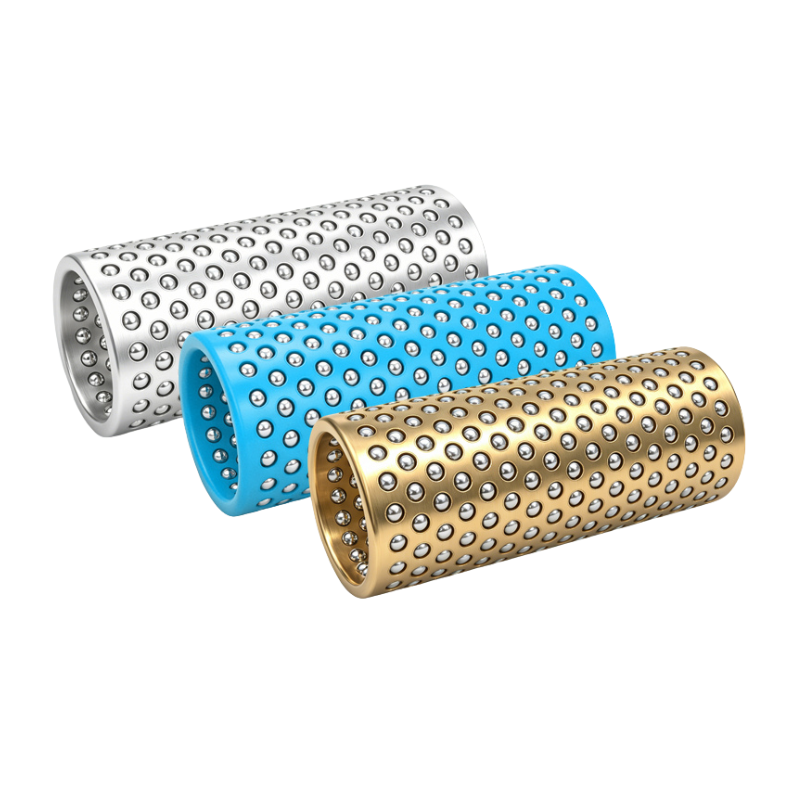
A ball bearing bushing, also called a ball bearing guide bushing mold, is a precision mold guide component that uses hardened steel balls between the guide bushing body and guide post, which provides rolling contact during mold movement.
Unlike a plain guide bushing, which relies on sliding contact, a ball bearing bushing uses rolling elements to reduce friction and support smooth reciprocating motion.
| Component | Main Function |
| Ball Bearing Bushing | Houses and supports the rolling guide assembly |
| Ball Cage | Retains and spaces the bearing balls |
| Guide Post | Provides the precision mating surface |
How Does a Ball Bearing Bushing Work?
The ball guide bushing functions as a complete linear guidance unit. As the guide post enters the bushing, an internal steel ball system converts sliding contact into rolling contact, thereby reducing friction within the mold guidance system and maintaining alignment during repeated cycles.


The hardened balls maintain contact with the guide post surface.

As the mold moves, the balls roll instead of the bushing sliding directly against the guide post.

The rolling contact supports smooth and repeatable linear movement.
Ball Bearing Bushing Design & Performance Features
Your mold guide system runs on precision, and precision comes from engineering. These six design details are what separate a reliable ball bearing bushing from one that fails early.

Hardened steel balls provide the rolling contact between the guide post and bushing assembly.

Consistent ball spacing helps distribute contact around the guide post and maintain stable guidance.

The internal bore controls the relationship between the bushing and guide post. This makes the post and bushings fit well.

The bearing contact surfaces are designed for repeated mold movement.

Accurate geometry helps maintain stable alignment between guide components.

The ball-retaining structure prevents ball displacement during installation and operation.
Custom Ball Bearing Bushing Manufacturing
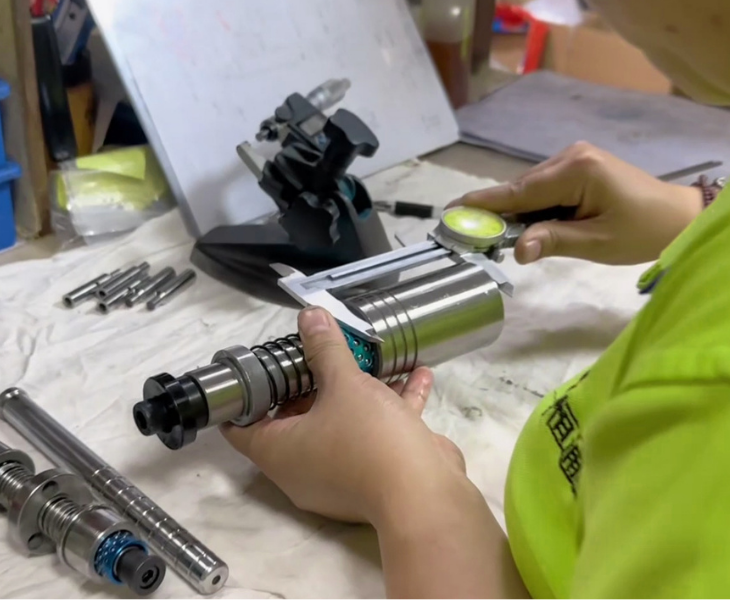
HTX manufactures custom ball bearing bushings from your drawing or sample. Every specification is verified in-house, from material to final assembly.
- Drawing Review
We confirm bore, OD, length, ball arrangement, mounting structure, and guide post dimensions before production begins.
- Material Confirmation
Bushing body material, bearing ball material, hardness, and surface treatment are selected and confirmed according to your application.
- Precision Machining
Bore, OD, concentricity, and ball race geometry are machined to controlled tolerances in one setup where possible.
- Ball Assembly
Precision balls are installed and secured according to the specified arrangement and retention design, ensuring free rotation and secure positioning.
- Final Inspection
ID, OD, length, concentricity, ball movement, and running smoothness are all checked before shipment.
Ball Bearing Bushing Applications
Ball bearing bushings are used wherever a mold or precision tool needs repeated, accurate linear guidance. These applications share one requirement: the guide system must stay aligned, stroke after stroke.
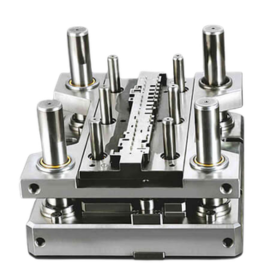
High-frequency reciprocating movement demands a guide system that ensures repeated alignment between die components. Ball bearing bushings reduce friction at every stroke, supporting the fast cycle rates stamping dies run at.
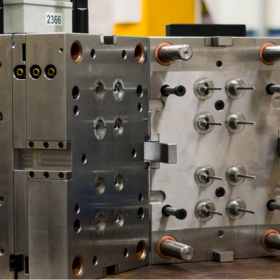
Mold opening and closing cycles put continuous stress on guide components. Ball bearing bushings maintain guide alignment and repeated mold opening and closing, helping prevent flash and core shift.
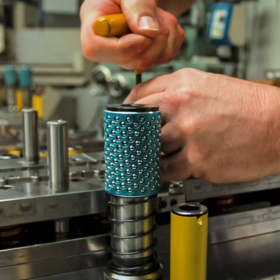
Positioning accuracy is non-negotiable in applications requiring repeatable linear guidance. Ball bearing bushings provide controlled movement and repeated guide motion with minimal play, keeping every cycle within tolerance.
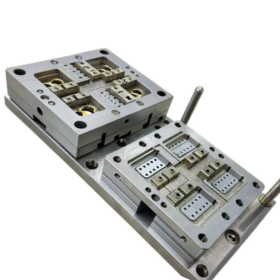
High-cycle production and large tooling put heavy demands on guide systems. Ball bearing bushings deliver the repeatability needed for automotive molds and dies running around the clock.
Ball Bearing Bushing Selection Factors
Match the bushing to your guide system dimensions and operating conditions. The table below walks through each selection factor in order.
| Selection Factor | What to Check | Why It Matters |
| Guide Post Diameter | Measure the mating post first | Bushing is selected around the post, not the reverse |
| Bushing Inner Diameter | Running fit with guide post | Too tight binds; too loose loses alignment |
| Outer Diameter | Mounting bore in mold plate | Must fit available installation space |
| Overall Length | Guidance length vs. mold stroke | Longer bushing = better alignment stability |
| Load | Radial side forces from mold process | Prevents excessive deflection during operation |
| Stroke & Speed | Reciprocating frequency and stroke length | Affects heat generation and wear rate |
| Operating Environment | Contamination, temperature, lubrication | Determines surface treatment requirements |
| Required Accuracy | Fit, clearance, concentricity | Must match mold precision level |
| Material & Treatment | Wear, corrosion, temperature exposure | Hardened steel standard; coatings for demanding use |
A ball bearing bushing uses rolling contact—hardened steel balls between the post and bushing. A plain bushing uses sliding contact between two surfaces. Rolling contact produces less friction, less heat, and longer service life.
Common causes include excessive load, misalignment between guide post and bushing, contamination from dust or debris, insufficient lubrication, incorrect clearance, and poor installation. Regular inspection and proper alignment prevent most premature wear.
Yes. Both applications involve repeated mold movement that benefits from lower friction and stable alignment. The key is matching the bushing size and configuration to the specific load, speed, and guide system of each tool.
More You Need to Know About the Ball Bearing Bushings
Ball Bearing Bushing Failure & Troubleshooting
| Problem | Possible Cause | What to Check |
| Rough movement | Contamination | Clean guide system |
| Excessive play | Incorrect fit/wear | Check bore and post fit |
| Ball noise | Damaged balls | Inspect rolling elements |
| Premature wear | Excessive load/misalignment | Check alignment and load |
| Seizure | Contamination/clearance issue | Check installation and clearance |
| Uneven movement | Guide post misalignment | Check guide post alignment |
Ball Bearing Bushing vs Plain Guide Bushing
Ball bearing bushings are generally considered when lower rolling friction and smooth repeated guide movement are important. Plain guide bushings may be more appropriate where simplicity, cost, or self-lubricating operation is the priority.
| Feature | Ball Bearing Bushing | Plain Guide Bushing |
| Contact | Rolling | Sliding |
| Friction | Lower | Higher |
| Movement | Smooth reciprocating | Sliding movement |
| High-speed movement | Suitable for selected applications | Application dependent |
| Alignment | High precision | Application dependent |
| Maintenance | Depends on design/lubrication | Depends on material |
| Best suited for | Precision/high-frequency guidance | General guide systems |
Need a Custom Ball Bearing Bushing?
Send us your part drawing, inner and outer diameters, overall length, guide post size, material requirements, surface treatment, quantity, application, and tolerance requirements. HTX precision will evaluate all the features and deliver a bushing that fits your mold.