
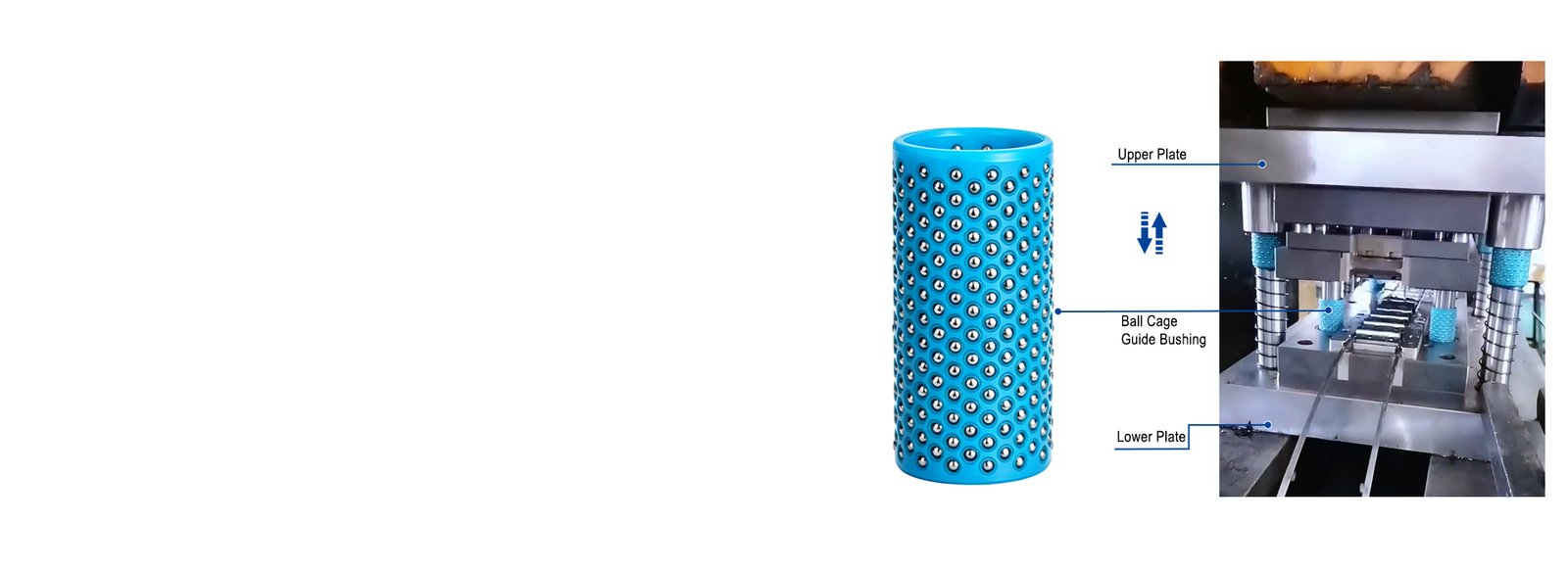
What Is a Plastic Ball Cage?
The plastic ball cage is a lightweight mold guide component that retains precision steel balls between guide posts and guide bushings. It uses a molded or machined plastic cage body.
Compared with metal cage designs, a plastic ball cage is suitable for light load applications, where low moving mass and quiet movement are more important than high load-bearing capacity.
What Makes Plastic Ball Cage Different?

The plastic ball cage offers relatively low friction for steel ball movement, making it suitable for applications where guiding resistance must be minimized.

Compared to brass and other metal cage structures, plastic cages are lighter in weight, offering an advantage for systems involving frequent reciprocating motion.

The plastic ball cage effectively reduces mechanical operating noise, making it particularly suitable for applications that require quiet guidance.

Plastic ball cages are commonly used in guidance systems subject to relatively low loads and impact forces; however, if the system must withstand heavy loads, severe impacts, or rigorous continuous production conditions, metal cages may be more suitable.
Engineering Design of Plastic Ball Cage
| Design Feature | Engineering Function |
| Plastic Cage Body | Keeps the steel balls evenly positioned |
| Precision Ball Pockets | Controls individual ball positioning |
| Hardened Steel Balls | Provide rolling contact with guide components |
| Controlled Ball Spacing | Supports stable rolling movement |
| Precision Inner Diameter | Maintains compatibility with the guide system |
| Lightweight Cage Structure | Reduces moving mass |
| Cage Material Stability | Maintains cage geometry under the specified operating conditions |
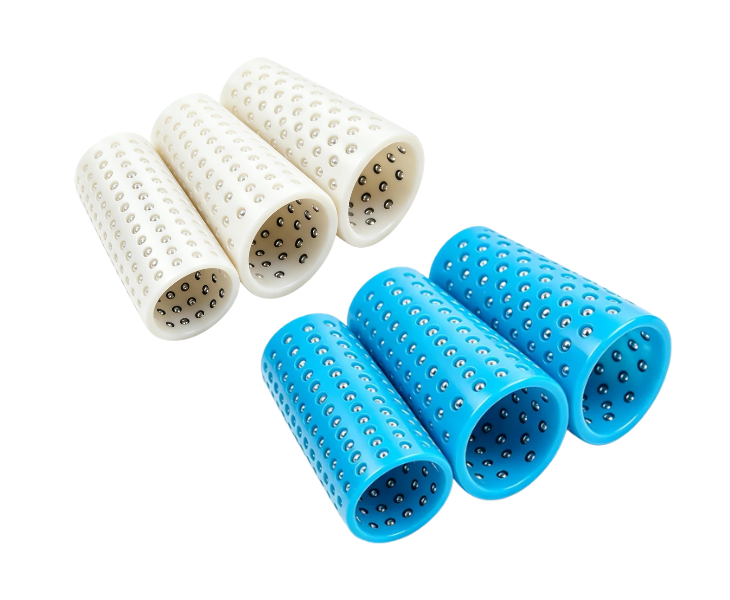
Plastic Ball Cage Application
Plastic ball cages are suitable for applications involving light loads, high speeds, and low noise.
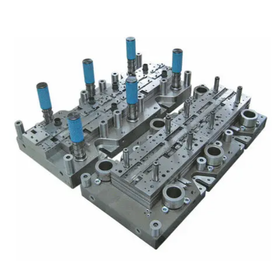
For low-load molds and small components, where the guidance system generally does not need to withstand high tonnage, plastic ball cages can provide smooth, quiet movement.
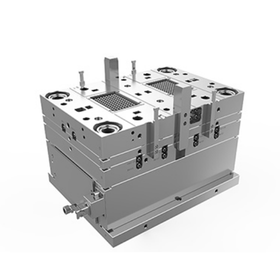
Plastic ball cages are lightweight, effectively supporting high-speed, frequent guiding movements; their lower mass means they are subjected to less stress during acceleration.
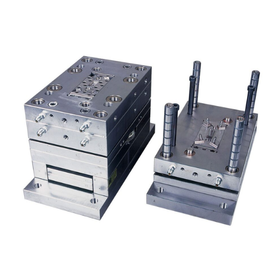
Plastic is more effective than metal at dampening vibration; consequently, plastic ball cages operate with significantly lower noise levels in environments such as cleanrooms, medical device manufacturing facilities, and settings where operational comfort is a priority.
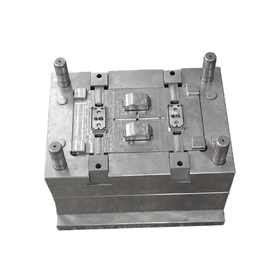
In specific injection molding applications requiring chemical resistance or reduced lubrication, plastic ball cages can provide a practical solution for smooth guide movement. Material compatibility and operating conditions should be evaluated before selection.
Plastic vs Aluminum vs Brass Ball Cage
| Requirement | Plastic | Aluminum | Brass |
| Low friction | Excellent | Good | Good |
| Moving weight | Very Low | Low | Medium |
| Noise reduction | Excellent | Good | Good |
| Light-load applications | Excellent | Good | Good |
| High-speed movement | Application dependent | Strong choice | Application dependent |
| Mechanical strength | Lower | Medium | Higher |
| Heavy impact | Not preferred | Application dependent | Strong choice |
| High-cycle wear resistance | Application dependent | Good | Strong choice |
Plastic is generally selected for low friction, quiet operation, and low moving weight. Brass is more appropriate when higher load capacity and wear resistance are required, while aluminum is often considered for lightweight, higher-speed applications.
Custom Plastic Ball Cage Manufacturing
HTX can review customer drawings and evaluate cage dimensions, ball arrangement, material requirements, and guide-system compatibility before production.
Based on your requirements, including operating temperature and lubrication, we need to confirm the plastic material and the steel ball specification before production.
Manufacture the cage in accordance with the confirmed drawing and production requirements.
Install and secure the steel balls according to the specified arrangement.
We check the dimensional accuracy, ball position accuracy, surface finish, running smoothness, dimensional tolerances, and final assembly inspection before packaging and shipment.
In certain applications, depending on factors such as plastic material, steel ball specifications, load, speed, temperature, and operating environment, plastic cages can operate with reduced or no additional lubrication. For continuous production or demanding guidance systems, lubrication requirements should be verified based on actual operating conditions.
The permissible operating temperature depends on the specific plastic material, load, operating speed, lubrication conditions, and continuous operating conditions. Given the varying properties of different engineering plastics, HTX recommends verifying the required operating temperature range before selecting a cage material.
Under heavy loads, plastic ball cages exhibit greater elasticity and are more prone to deformation than metal ball cages. Therefore, factors such as load, ball diameter, operating temperature, and operating conditions must be comprehensively evaluated during selection. Plastic ball cages are better suited for light-load guidance systems and are not appropriate for applications involving heavy loads or severe impacts.
There is no fixed service life value for any type of plastic ball cage. For high-cycle applications, it is necessary to comprehensively consider load, speed, cycle frequency, temperature, lubrication, guidance alignment, installation precision, and the specific plastic material selected.
Yes, for the entire guidance system, the right material is more important than cleanliness requirements. If the cage material, steel balls, lubrication requirements, and operating environment are matched, plastic cages can be used in specific cleanrooms or oil-free guidance applications.
When Is a Plastic Ball Cage the Right Choice?
| Application Requirement | Plastic Ball Cage |
| Low friction | Recommended |
| Quiet operation | Recommended |
| Very lightweight moving structure | Recommended |
| Light-load guide movement | Recommended |
| Frequent reciprocating movement | Application dependent |
| High-speed + light-load | Application dependent |
| Heavy impact stamping | Consider Brass |
| Higher mechanical load | Consider Brass |
| High-speed + greater structural demand | Consider Aluminum |
| Oil-free / reduced-lubrication operation | Application dependent |
Need a Custom Plastic Ball Cage?
Send us your drawing, sample, or application requirements. HTX can evaluate the cage dimensions, ball arrangement, material requirements, and guide-system compatibility for your application.