
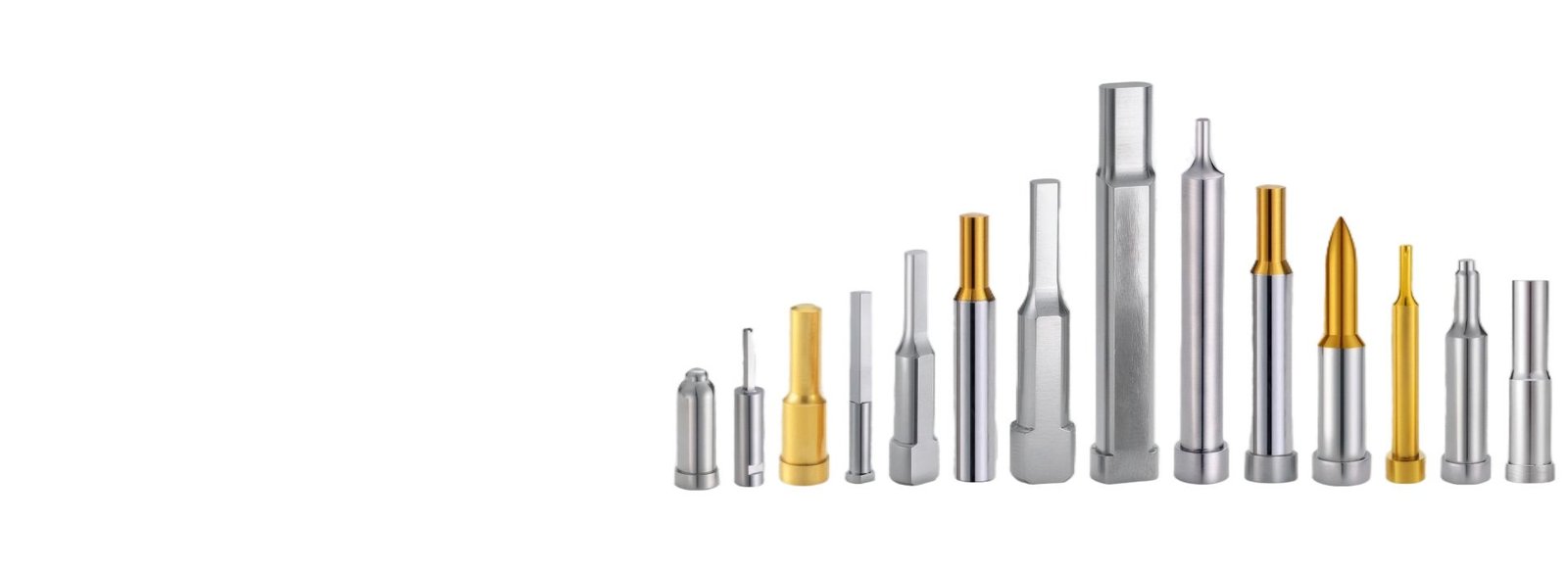
What Does the “Step” Mean in a Stepped Punch?
The “step” refers to a change in diameter, profile, or section along the punch body or working geometry. Depending on the tooling design, a stepped punch may have two or more cylindrical diameters, shoulders, or other tiered sections. These are commonly referred to as two-step punches, three-step punches, and so on.
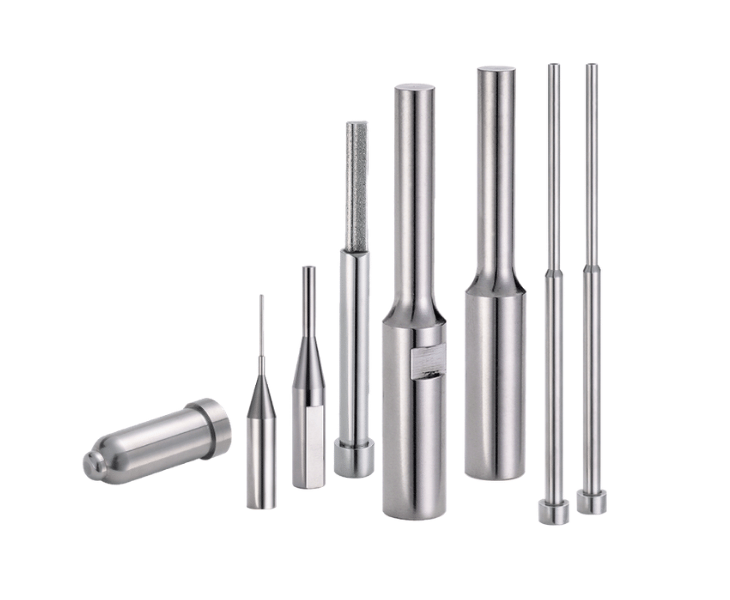
What Is a Stepped Punch?
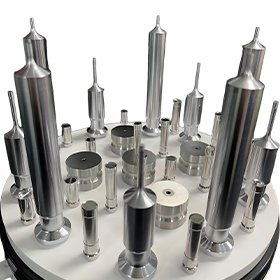
A stepped punch is a precision stamping die component with two or more diameter levels, shoulders, or stepped sections along its working geometry. Depending on the die design, the stepped profile can be used for multi-diameter piercing, staged contact, shearing, forming, or other specialized stamping operations. Stepped punches are commonly used in progressive dies, precision stamping dies, and custom tooling where a uniform straight punch does not meet the required working geometry.
The Custom Shape for Our Stepped Punches
We can custom all kinds of shapes for you stepped punches. Just depending on your request, you may just provide your 2D/3D drawing.
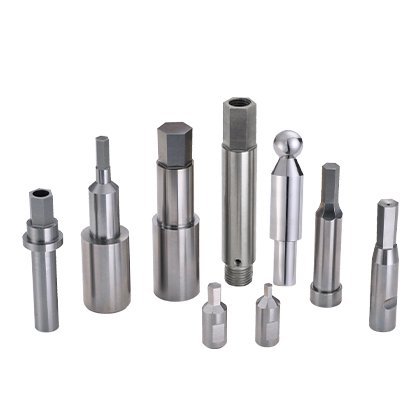
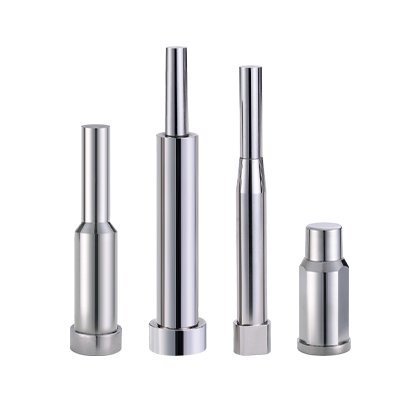
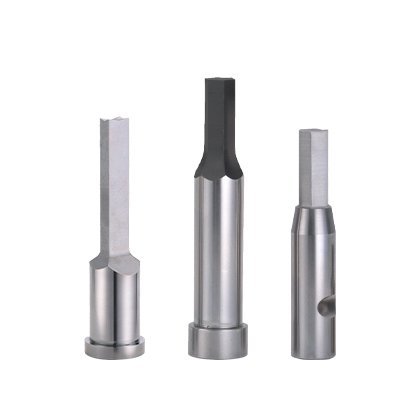
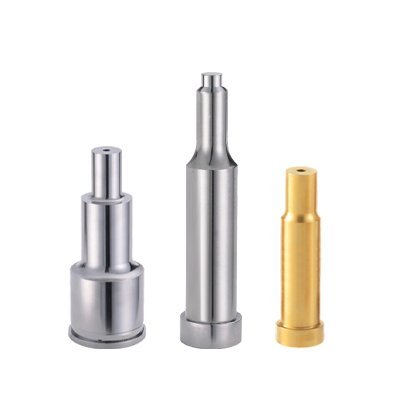
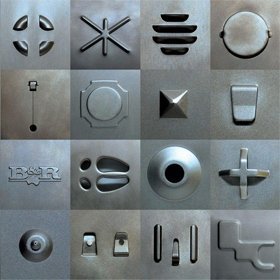
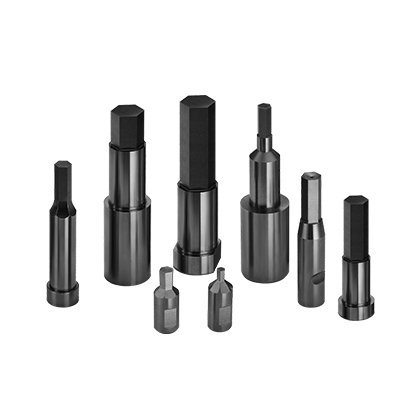 Custom-shaped Stepped Punches
Custom all kinds of shape like hex, slotting and so on.
Advantages of Our Stepped Punches
Our highly experienced engineering team provides you with great customer service for the stepped punches at the right time, and also at the right price.

Optimal tolerances significantly extend wear life

Extended lifespan saves time and material expenses

Long-lasting performance minimizes servicing frequency

Saves tool change and calibration time, boosting production output
When Should You Use a Stepped Punch?
A stepped punch is specified when the application requires it—not because it has more features. The geometry must follow the workpiece and die design. You need to use a stepped punch if:
- Different diameters are required along the punch
- The die design calls for a stepped working profile
- A specialized piercing or forming sequence is needed
- Multiple geometric sections must be built into one punch
- The application benefits from a custom stepped geometry
A stepped punch should not be selected simply because it looks more capable. The final geometry should be determined by the workpiece, die structure, material, thickness, clearance, and production requirements.
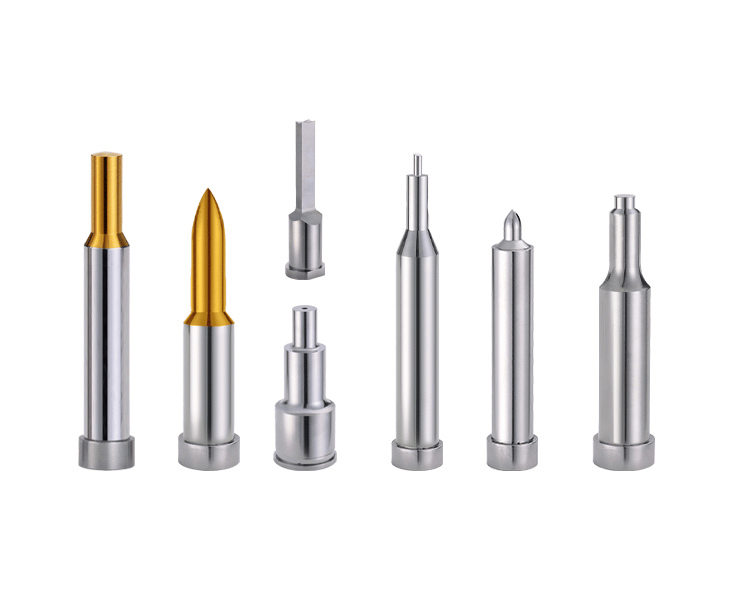
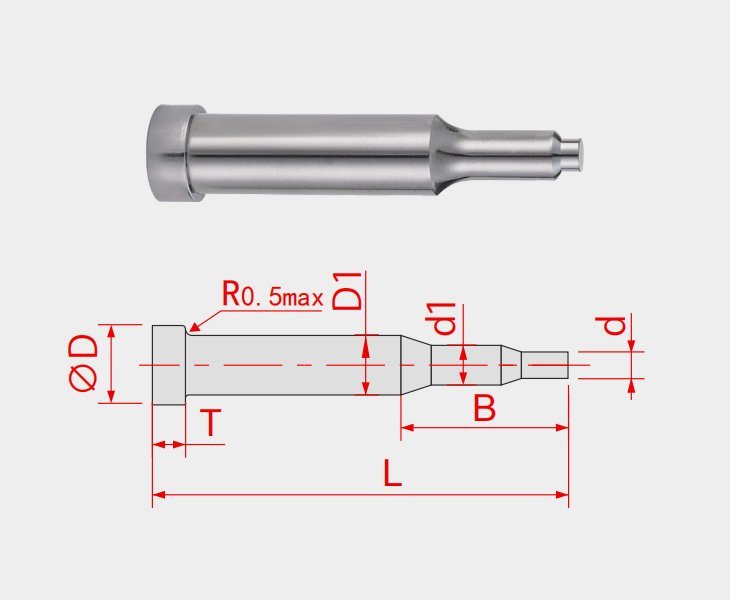
Custom of Our Stepped Punches
| Configuration | Typical Purpose |
|---|---|
| Multi-Diameter Stepped Punch | Different working diameters in one punch |
| Stepped Round Punch | Circular stepped profiles |
| Stepped Square Punch | Square or non-round working geometry |
| Special-Shaped Stepped Punch | Custom piercing/forming profiles |
| Multi-Step Punch | Multiple stepped sections along the working length |
HTX offers a wide variety of standard and custom products in both metric and imperial specifications, just like point diameter, step diameter, step height, overall length, tolerance, and material options. We provide custom precision stepped punches, including but not limited to:
- Manufacturing diameters from 0.3 to 40mm
- Manufacturing lengths up to 400mm
- Manufacturing surface finish down to 0.05μm
- Concentricity: controlled to 0.008 mm, depending on geometry and drawing requirements.
Certified Stepped Punch Materials
As a 23+ year OEM & ODM custom stepped punches leading manufacturer. We provide high-precision, non-easily damaged stepped punches; all punches are made of high-quality material and come with a certificate. You may ask us for the material certificate if you need it. You may choose High-speed steel (HSS), M2, M35, D2, SKH51, SKH55, or other tool steels to match the hardness at high temperatures.
| Material | Typical Use Consideration |
|---|---|
| HSS | High-speed precision stamping |
| M2 | General HSS punch applications |
| M35 | HSS option for demanding wear/hot-hardness conditions |
| D2 | High wear resistance in cold-work tooling |
| SKH51 | High-speed precision stamping |
| SKH55 | Application-dependent HSS option |
| SKH11 / DC53 | Application-dependent cold-work tooling |
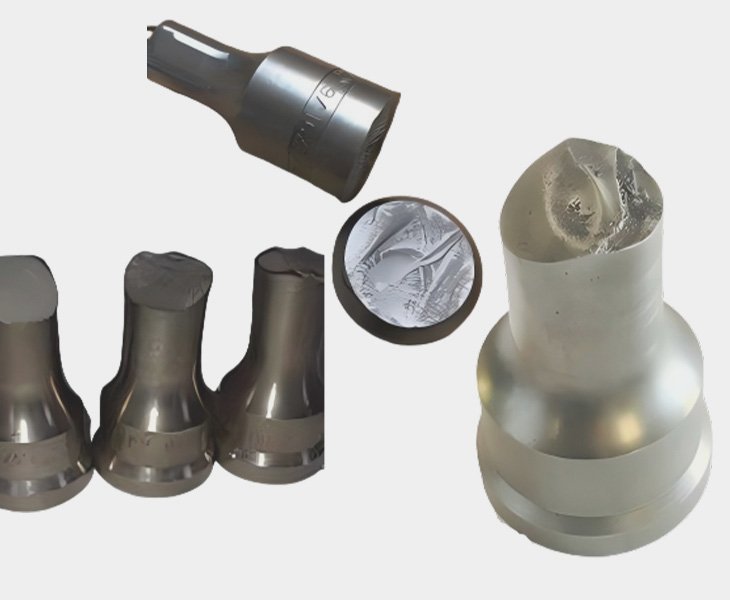
Application of the Stepped Punch
Stepped punches are used where the punch geometry must match a specific piercing, forming, or stamping requirement. These are the most common application areas.
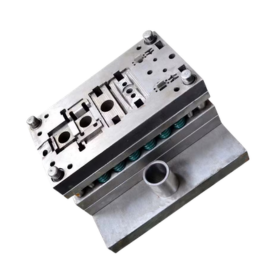
Used in progressive dies for specific piercing, forming, or complex geometry work at individual stations.
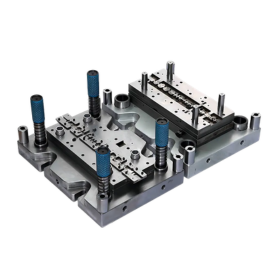
Applied where hole diameter and working geometry must be tightly controlled.
One punch carries multiple diameter sections, allowing different hole sizes to be produced in a single tool.
Used for localized forming such as flanging, embossing, or shallow drawing based on special geometry.
With proper design, stepped punches are used in high-strength steel shearing. Studies show stepped geometry affects contact pressure distribution and punch life.
Stepped Punch vs Straight Punch
| Feature | Stepped Punch | Straight Punch |
|---|---|---|
| Geometry | Multiple diameters / stepped sections | Uniform working diameter |
| Main Advantage | Supports specialized multi-diameter or staged geometry | Simple, uniform punching |
| Design Complexity | Higher | Lower |
| Typical Use | Specialized piercing/forming | General piercing/punching |
| Customization | Often drawing-based | Standard and custom |
| Selection | Depends on part and die geometry | Suitable for uniform hole/profile |
How Does a Stepped Punch Work?
Depending on the geometry, the punch may be used for multi-diameter piercing, staged contact, forming, or specialized shearing operations. The punch and die clearance must be selected according to the workpiece material, thickness, tooling geometry, and required result.
The punch descends toward the material surface under press force.
The first or largest-diameter section contacts the material according to the die layout. Which section engages first depends on the punch design.
As the stroke continues, additional steps on the punch contact the material at different positions or penetration depths. This allows staged contact, multi-diameter piercing, or forming as designed.
The gap between each punch step and the die determines whether the operation is shearing, forming, or a combination. Clearance directly affects edge quality and part dimensions.
After the stroke is complete, the punch retracts. The formed or pierced part is released by the die or ejector system.
Stepped punches are better suited for progressive die, fine blanking, hydro forming, multi-step punching in one operation, and so on.
Yes, we have many standard stepped punch in store, for the exact type and size, please contact us for details, we can ship them out in 48hours at most, and we can fully customize the diameter, head profile also according to your drawings, special shape is also workable, whether it’s round, square, or hexagonal.
There is no universal punch-to-die clearance for stepped punches. The appropriate clearance depends on the workpiece material, sheet thickness, required edge quality, punch geometry, and die design. For a new application, HTX can evaluate the drawing, material, thickness, and stamping requirements to recommend an appropriate clearance range.
Yes, it is very compatible, compatibility depends on workpiece material, thickness, hardness, required hole geometry, punch material, die material and clearance. Contact us for professional advice.
Selected standard stepped punches may be available for rapid shipment from stock. Please confirm current stock and lead time with HTX.
Custom production lead time is typically 3–7 working days depending on geometry, material, quantity, and inspection requirements. No MOQ limit.
Our QC team will make 100% inspection before shipment, including but not limited to the diameter measurement, point diameter, concentricity requirements, if the issue is due to a quality problem with our product, we promise a 100% replacement.